
Inicio > Humanidades > Religión y creencias > Religión: general > Historia de la religión > Alcohol in the Maghreb and the Middle East since the Nineteenth Century
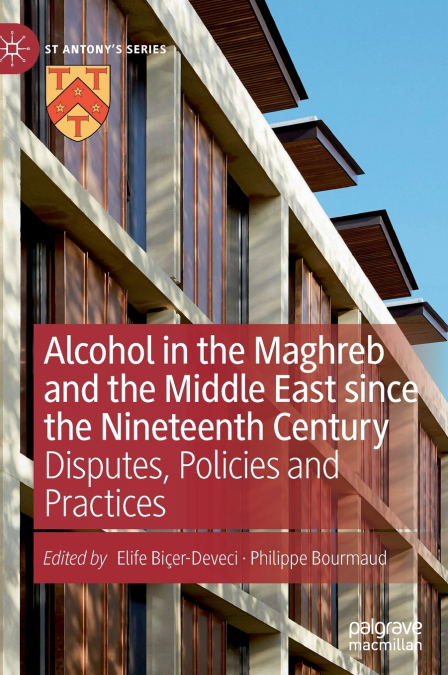
Alcohol in the Maghreb and the Middle East since the Nineteenth Century

Alcohol in the Maghreb and the Middle East since the Nineteenth Century


169,33 €
IVA incluido
Consulta disponibilidad
Editorial:
Springer Nature B.V.
Año de edición:
2022
Materia
Historia de la religión
ISBN:
9783030840006

Selecciona una librería:

  • Librería Samer Atenea
  • Librería Aciertas (Toledo)
  • Kálamo Books
  • Librería Perelló (Valencia)
  • Librería Elías (Asturias)
  • Donde los libros
  • Librería Kolima (Madrid)
  • Librería Proteo (Málaga)

This book explores the significance of alcohol in the Middle East and Maghreb as a powerful catalyst of social and political division. It shows that the solidarities and polarities created by disputes over alcohol are built on arguments far more complex than oppositions on religion or consumption alone. In a region in which alcohol is banned by Islamic rules, yet allows its production and consumption, alcohol has always been contentious. However, this volume examines the different forms of social authority - religious, cultural and political - to offer a new understanding of drinking behaviours in the Middle East and North Africa. It suggests that alcohol, being at the same time an import and product of local industry, epitomises the tensions inherent to the conforming of Islamic societies to global trends, which seek to redefine political communities, social hierarchies and gender roles. The chapters challenge common misconceptions about alcohol in this region, arguing instead that medical discourses on alcohol dependency hide stances on national independence in an imperialist context; that the focus on religion also tends to conceal disputes on alcohol as a social struggle; and that disputes on inebriation are more about masculinity than judging private leisure. In doing so, the volume presents alcohol as a way of grasping the power relations that structure the societies of the Middle East and Maghreb.
Artículos relacionados

  • Key to Countering Islamic Fundamentalism
    Maryam Rajavi
    Testimony before U.S. House Foreign Affairs Committee's subcommittee on Terrorism, non-Proliferation, and Trade discussing ISIS and Islamic fundamentalism. The book contains Maryam Rajavi's full testimony as well as the question and answer by representatives. During the hearing, Maryam Rajavi who is the president-elect of Iran's parliament-in-exile, the National Council of Resi...
    Disponible

    13,94 €

  • IRAN-A Writ of Deception and Cover-up
    NCRI- U.S. Representative Office / NCRI- U.SRepresentative Office
    Based on reliable information obtained by the Mujahedin-e Khalq (MEK) network inside Iran, a top-secret committee is in charge of drafting the answers to the International Atomic Energy Agency (IAEA) regarding the Possible Military Dimensions (PMD) of Tehran's nuclear program. Top officials from the Islamic Revolutionary Guards Corps (IRGC) and the Ministry of Defense Armed...
    Disponible

    5,44 €

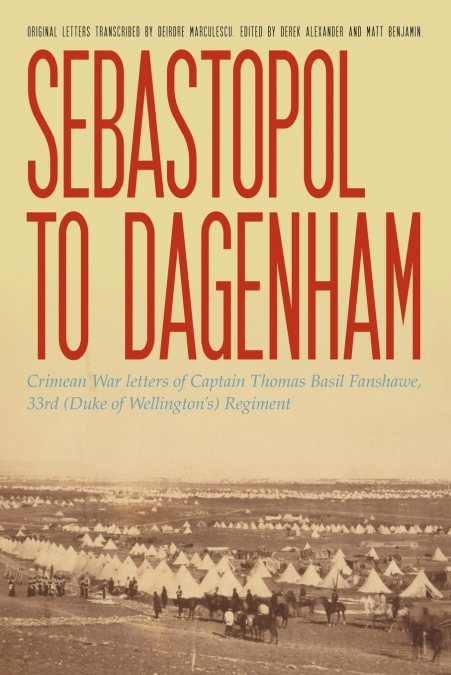
  • Sebastopol to Dagenham
    Thomas Basil Fanshawe
    'Sebastopol appears to be a succession of forts which the Russians are strengthening every day. A great number of the men are sick of the whole concern. No one looks forward to another winter out here with any degree of satisfaction'.Captain Thomas Basil Fanshawe served with the 33rd (Duke of Wellington's) Regiment at Sebastopol during the Crimean War. The letters h...
    Disponible

    23,05 €

  • THEN AND NOW
    Hussein Shabka
    The rise and fall of civilizations has been a fact of history since before it was recorded. It is a normal process. So what is the particular significance of Egypt’s descent from a wealthy, organized, sophisticated society into the chaotic milieu that reigns today? Perhaps it relates to the nature of the yawning gap that exists between that sophistication that endured for more ...
    Disponible

    33,86 €

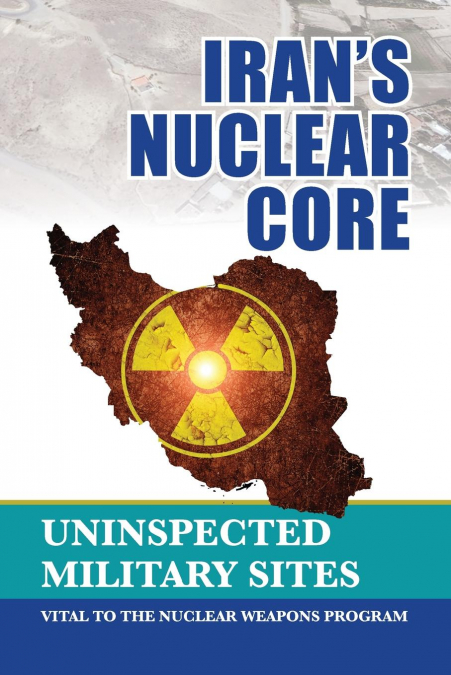
  • Iran’s Nuclear Core
    NCRI- U.S. Representative Office / NCRI- U.SRepresentative Office
    Iran's Nuclear Core details how the nuclear weapons program is at the heart, and not in parallel, to the civil nuclear program of Iran. The program is run by the Islamic Revolutionary Guards Corp (IRGC) since the beginning, and the main nuclear sites and nuclear research facilities have been hidden from the eyes of the United Nations nuclear watchdog.The manuscript details ...
    Disponible

    23,24 €

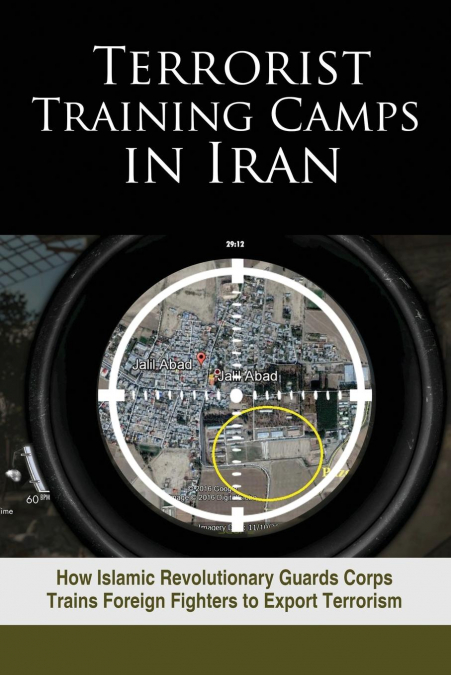
  • Terrorist Training Camps in Iran
    NCRI- U.S. Representative Office / NCRI- U.SRepresentative Office
    The book details how  Islamic Revolutionary Guards Corps trains foreign fighters in 15 various camps in Iran to export terrorism. The IRGC has created a large directorate within its extraterritorial arm, the Quds Force, in order to expand its training of foreign mercenaries as part of the strategy to step up its meddling abroad in Syria, Iraq, Yemen, Bahrain, Afghanistan and el...
    Disponible

    23,24 €