

 Librería Samer Atenea
 Kálamo Books
 Librería Elías (Asturias)
 Librería Kolima (Madrid)
 Librería Proteo (Málaga)
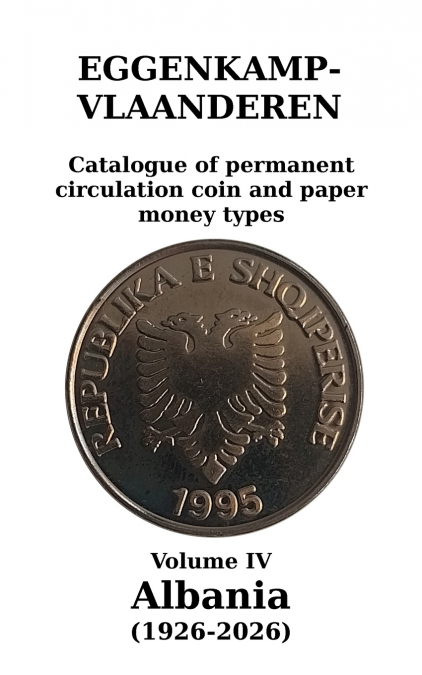
The period of modern numismatics (since about 1800) is perhaps the most interesting ever. Within this period different types of standards (silver, gold, bimetallic) alternated, and periods of sometimes impressive inflation occurred, resulting in alternate use of metallic (coins) and paper (treasury notes, banknotes) money. In this series of books it is aimed to develop a scientific classification of the different appearances of circulating money (both coins and different types of paper and polymer money) in one system. It focuses purely on permanent circulation money to avoid incorporation of modern commemorative coins that are in many instances hardly seeing any circulation. The currency described in this series is classified according to a newly developed classification scheme, that is based on four levels: i) The nominal value, ii) The first year a new coin or paper money series is issued, iii) The year of a specific issue and iv) variations of specimens within a year. As the catalogues in this book series are type catalogues they focus on the first two levels of this classification only.This fourth volume describes the circulation coin and paper money types from Albania that was issued between 1926 and 2016. 2016 marks the year that Albania introduced its own currency 100 years ago, and it justifies to celebrate this joyous occasion with the issue of a new catalogue of the coins and banknotes that circulated in Albania. This concerns all normal circulation money that circulated in the Albania since introduction of nationwide issued coins and banknotes in Franga and Lek. While some local paper money had circulated before only from 1926 the country as a whole issued its circulating currency. It describes the coins and paper money strictly in increasing nominal value from the lowest (the 5 Qindar Leku coin of 1926) to the highest (the current 10000 Lek note). During this 100 years three redenominations have taken place, two of them in the just after the second World War had ended, which also ended the first period of prolonged inflation in Albania. The second period with high inflation took place in the early 1990s just after the country changed from a communist to a democratic government. During other periods the Albanian currency has always been a very stable one.





