Burhan ad-Din al-Fargh... al-Marghinani
 Librería Samer Atenea
 Kálamo Books
 Librería Elías (Asturias)
 Librería Kolima (Madrid)
 Librería Proteo (Málaga)
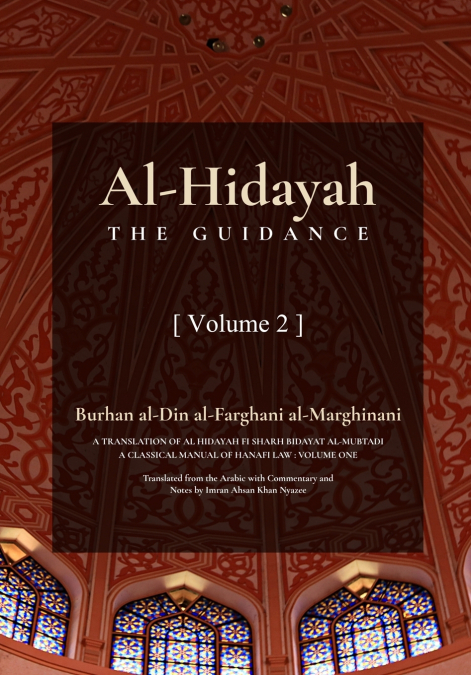
Al-Hidayah (The Guidance), Volume Two Burhan Ad-Din Al-Farghani Al-MarghinaniClassical Hanafi Jurisprudence: Legal Responsibility, Public Authority, and Juristic InterpretationAl-Hidayah is a major work of classical Hanafi Islamic jurisprudence, recognised for its systematic presentation of legal rulings and the reasoning underlying their interpretation.Authored by Burhan Ad-Din Al-Marghinani, the text brings together established legal doctrine, Qur’anic evidence, Prophetic traditions, and comparative juristic analysis within the intellectual framework of the Hanafi school.Volume Two continues this comprehensive legal exposition, examining subjects relating to family law, contractual responsibility, criminal jurisprudence, relations between political communities, property, and personal legal status.The Principal Areas of StudyThe volume begins with an extensive treatment of divorce and its legal consequences, including marital dissolution, reconciliation, waiting periods, paternity, custody, and maintenance.It subsequently examines ’ataq (emancipation), addressing the historical legal institution of slavery, the procedures of manumission, and the legal consequences of changes in personal status.The discussion of ayman (vows and oaths) considers the binding nature of declarations, their interpretation, and the circumstances requiring expiation.Further sections examine hudud (fixed penalties), theft, and sariqah, including the legal classifications, evidentiary requirements, and conditions associated with criminal liability in classical Hanafi jurisprudence.A substantial division is devoted to siyar, the classical Islamic legal literature governing relations with non-Muslims and questions of war and peace.This material includes the legal status of al-jihad (regulated armed defense and warfare in classical Islamic law), the rules governing hostilities, safe conduct, agreements, the division of war-related property, and the legal status of protected communities.These discussions are presented as historical jurisprudence concerning legitimate authority, legally recognised obligations, and the limits established by classical legal doctrine.The concluding books examine foundlings, found property, runaway slaves, and missing persons, addressing questions of personal status, ownership, protection, legal claims, and responsibility.Legal Methodology and Scholarly InterpretationThroughout the volume, Al-Marghinani presents juristic rulings alongside their textual and analytical foundations.The discussions reveal how classical Hanafi jurists evaluated Qur’anic provisions, Prophetic traditions, legal analogy, juristic preference, consensus, and differences between established authorities.The work is distinguished by its careful treatment of legal conditions, exceptions, evidentiary standards, and the relationship between general principles and particular cases.Imran Ahsan Khan Nyazee’s translation and explanatory commentary assist English-language readers in examining these legal discussions within their original scholarly and historical framework.Volume Two provides a systematic study of legal responsibility, lawful authority, personal status, and the historical institutions of classical Islamic law.