
Inicio > Economía, finanzas, empresa y gestión > Economía > Aktive Arbeitsmarktpolitik in Neuseeland
Aktive Arbeitsmarktpolitik in Neuseeland

Aktive Arbeitsmarktpolitik in Neuseeland

Aktive Arbeitsmarktpolitik in Neuseeland

Ilka Güse

45,45 €
IVA incluido
Disponible
Editorial:
diplom.de
Año de edición:
1999
Materia
Economía
ISBN:
9783838613659
45,45 €
IVA incluido
Disponible

Selecciona una librería:

  • Librería Samer Atenea
  • Librería Aciertas (Toledo)
  • Kálamo Books
  • Librería Perelló (Valencia)
  • Librería Elías (Asturias)
  • Donde los libros
  • Librería Kolima (Madrid)
  • Librería Proteo (Málaga)

Inhaltsangabe:Problemstellung: Von 1984 bis 1991 vollzog die neuseeländische Regierung eine grundlegende Reform des Wirtschaftssystems. Vor dieser Zeit war Neuseeland ein Staat, der den Wirtschaftsprozeß stark beeinflußte. Als Folge dieser Reform entwickelte sich das Land zu einem der am wenigsten regulierten Staaten innerhalb der OECD. Diese Entwicklung stellte sich deshalb ein, weil sich die makroökonomischen Daten seit Mitte der 70er Jahren ständig verschlechtert hatten. Als Eckpfeiler der Reform waren die Deregulierung weiter Teile der Wirtschaft, die Liberalisierung des Kapitalverkehrs, die Freigabe des Wechselkurses und die Abschaffung von Lohn- und Preiskontrollen anzusehen. Des weiteren wurden ein großer Teil der Subventionen für die Industrie und die Landwirtschaft gestoppt. Der Handel wurde für den internationalen Wettbewerb geöffnet, eine umfassende Steuerreform wurde eingeleitet, die Notenbank wurde unabhängig und auf ein Inflationsziel verpflichtet; zudem wurden staatliche Einrichtungen in eigenständige Kapitalgesellschaften umgewandelt. Da die neuseeländische Regierung den Wohlfahrtsstaat und den Arbeitsmarkt bis 1990 nicht in das Reformpaket eingefügt hatte, war die Wirtschaftsordnung bis dahin als lediglich halbreformiert anzusehen. Die wirtschaftliche Lage war zu dieser Zeit aufgrund der nur einseitigen Reformpolitik durch eine desolate fiskalische Situation charakterisiert. Vor dem Hintergrund negativen Wachstums und hoher Arbeitslosigkeit sowie niedriger Inflation und schwacher Wechselkurse wurde eine zweite Runde schneller wirtschaftlicher Reformen vorangetrieben. Neben der Rationalisierung der Sozialausgaben wurde der Arbeitsmarkt mit der Einführung des 'Employment Contract Act' im Mai 1991 liberalisiert. Damit fand diese Reformwelle den bisherigen Abschluß der radikalen Umorientierung der neuseeländischen Wirtschaftsordnung. Der zentrale Gegenstand der vorliegenden Arbeit ist im Hinblick auf die Umwandlung des Wirtschaftssystems in Ne


Artículos relacionados

  • Principles of Economics 2e
    David Shapiro / Steven A. Greenlaw / Steven AGreenlaw / Timothy Taylor
    Principles of Economics 2e covers the scope and sequence of most introductory economics courses. The text includes many current examples, which are handled in a politically equitable way. The outcome is a balanced approach to the theory and application of economics concepts. The second edition has been thoroughly revised to increase clarity, update data and current event impact...
    Disponible

    49,73 €

  • Perspectivas sobre desarrollo y territorio en el nuevo contexto
    José I. Távara / Roxana Barrantes
    Las contribuciones de este volumen intentan expresar el reconocimiento y el homenaje a Efraín Gonzales de Olarte, entrañable integrante de nuestra comunidad universitaria, una persona comprometida con la investigación y la formación de varias generaciones de profesionales y ciudadanos, dedicada al fortalecimiento de la educación en nuestro país, tanto dentro como fuera de las a...
    Disponible

    20,75 €

  • Comparable Worth
    Elaine Sorensen
    For decades women working as nurses, librarians, and secretaries have argued that they are paid less than men in jobs requiring comparable skill and effort. By the late 1980s, the notion of 'comparable worth' had become a familiar one, and comparable worth initiatives were being developed to counteract the persistent disparities between male and female pay. In a comprehensive a...
    Disponible

    47,60 €

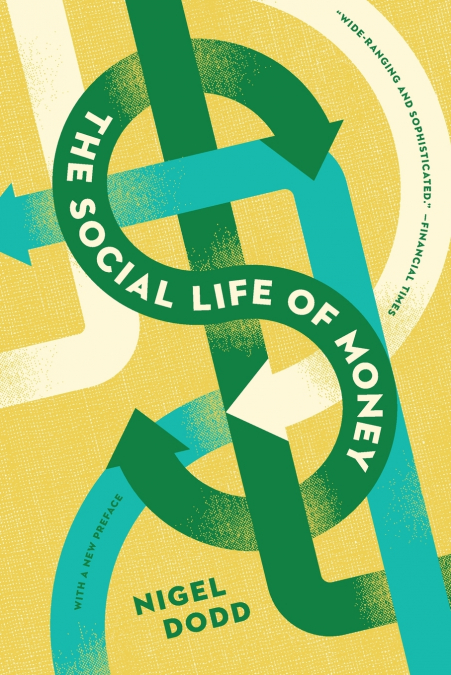
  • The Social Life of Money
    Nigel Dodd
    A reevaluation of what money is-and what it might beQuestions about the nature of money have gained a new urgency in the aftermath of the global financial crisis. Even as many people have less of it, there are more forms and systems of money, from local currencies and social lending to mobile money and Bitcoin. Yet our understanding of what money is-and what it might be-hasn’t ...
    Disponible

    36,83 €

  • Advances in Behavioral Economics
    Twenty years ago, behavioral economics did not exist as a field. Most economists were deeply skeptical--even antagonistic--toward the idea of importing insights from psychology into their field. Today, behavioral economics has become virtually mainstream. It is well represented in prominent journals and top economics departments, and behavioral economists, including several con...
    Disponible

    113,11 €

  • Financial Econometrics
    Christian Gouriéroux / Joann Jasiak
    Financial econometrics is a great success story in economics. Econometrics uses data and statistical inference methods, together with structural and descriptive modeling, to address rigorous economic problems. Its development within the world of finance is quite recent and has been paralleled by a fast expansion of financial markets and an increasing variety and complexity of f...
    Disponible

    216,13 €