 Librería Samer Atenea
 Kálamo Books
 Librería Elías (Asturias)
 Librería Kolima (Madrid)
 Librería Proteo (Málaga)
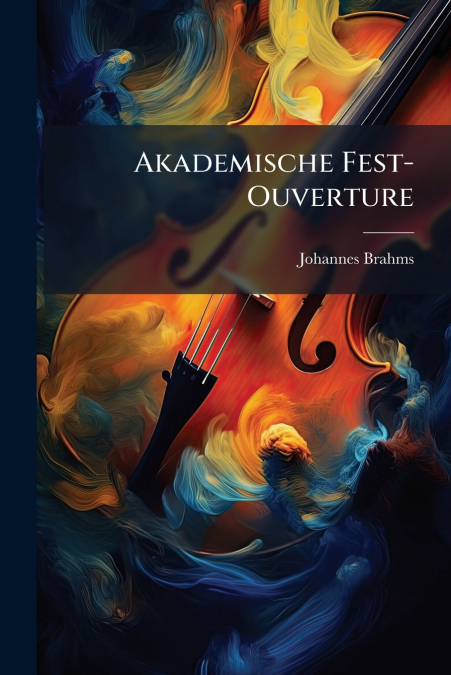
Johannes Brahms’s 'Akademische Fest-Ouverture, Op. 80' (Academic Festival Overture) is a celebrated orchestral work composed in 1880 and first performed in 1881. This overture, written in response to Brahms receiving an honorary doctorate from the University of Breslau, is a spirited and masterful blend of academic tradition and musical brilliance. The piece incorporates several popular German student songs, creating a festive and celebratory atmosphere. Brahms expertly weaves these familiar melodies into a cohesive and dynamic orchestral tapestry, showcasing his exceptional compositional skills. The 'Akademische Fest-Ouverture' remains a beloved work in the classical repertoire, appreciated for its joyful energy, intricate orchestration, and the composer’s unique ability to combine lighthearted themes with profound musical depth. This edition offers musicians and scholars an opportunity to study and perform one of Brahms’s most engaging and enduring orchestral compositions.This work has been selected by scholars as being culturally important, and is part of the knowledge base of civilization as we know it. This work was reproduced from the original artifact, and remains as true to the original work as possible. Therefore, you will see the original copyright references, library stamps (as most of these works have been housed in our most important libraries around the world), and other notations in the work.This work is in the public domain in the United States of America, and possibly other nations. Within the United States, you may freely copy and distribute this work, as no entity (individual or corporate) has a copyright on the body of the work.As a reproduction of a historical artifact, this work may contain missing or blurred pages, poor pictures, errant marks, etc. Scholars believe, and we concur, that this work is important enough to be preserved, reproduced, and made generally available to the public. We appreciate your support of the preservation process, and thank you for being an important part of keeping this knowledge alive and relevant.