Inicio > > Programación informática/desarrollo de software > Agents and Computational Autonomy
Agents and Computational Autonomy

Agents and Computational Autonomy


47,86 €
IVA incluido
Disponible
Editorial:
Springer Nature B.V.
Año de edición:
2014
Materia
Programación informática/desarrollo de software
ISBN:
9783662165317
47,86 €
IVA incluido
Disponible

Selecciona una librería:

  • Librería Samer Atenea
  • Librería Aciertas (Toledo)
  • Kálamo Books
  • Librería Perelló (Valencia)
  • Librería Elías (Asturias)
  • Donde los libros
  • Librería Kolima (Madrid)
  • Librería Proteo (Málaga)

This volume contains the postproceedings of the 1st International Workshop on Computational Autonomy - Potential, Risks, Solutions (AUTONOMY 2003), held at the 2nd International Joint Conference on Autonomous Agents and Multi-agentSystems(AAMAS2003),July14,2003,Melbourne,Australia.Apart from revised versions of the accepted workshop papers, we have included invited contributions from leading experts in the ?eld. With this, the present volume represents the ?rst comprehensive survey of the state-of-the-art of research on autonomy, capturing di?erent theories of autonomy, perspectives on autonomy in di?erent kinds of agent-based systems, and practical approaches to dealing with agent autonomy. Agent orientation refers to a software development perspective that has evolved in the past 25 years in the ?elds of computational agents and multiagent systems. The basic notion underlying this perspective is that of a computational agent, that is, an entity whose behavior deserves to be called ?exible, social, and autonomous. As an autonomous entity, an agent possesses action choice and is at least to some extent capable of deciding and acting under self-control. Through its emphasis on autonomy, agent orientation signi?cantly di?ers from traditional engineering perspectives such as structure orientation or object o- entation. These perspectives are targeted on the development of systems whose behavior is fully determined and controlled by external units (e.g., by a p- grammer at design time and/or a user at run time), and thus inherently fail to capture the notion of autonomy.

Artículos relacionados

  • SPARK 2014 Reference Manual
    AdaCore / Altran UK Ltd
    SPARK 2014 is a programming language and a set of verification tools designed to meet the needs of high-assurance software development. SPARK 2014 is based on Ada 2012, both subsetting the language to remove features that defy verification, but also extending the system of contracts and aspects to support modular, formal verification.This manual is available online for free at ...
    Disponible

    19,91 €

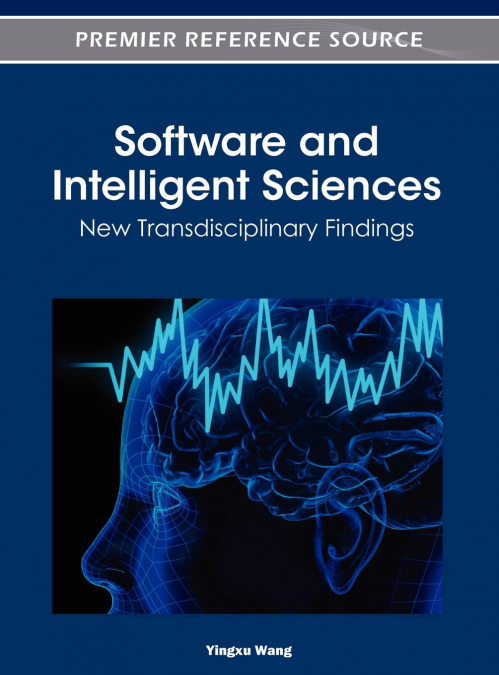
  • Software and Intelligent Sciences
    Yingxu Wang
    The junction of software development and engineering combined with the study of intelligence has created a bustling intersection of theory, design, engineering, and conceptual thought. Software and Intelligent Sciences: New Transdisciplinary Findings sits at a crossroads and informs advanced researchers, students, and practitioners on the developments in computer science, theor...
  • Power System Planning Technologies and Applications
    Fawwaz Elkarmi / Nazih Abu Shikhah / Nazih Abu-Shikhah
    Planning is an important function of the management of any business, providing knowledge of future prospects and enabling prudent and appropriate decision-making. Planning is especially critical for power systems, since electricity is a fundamental part of modern societies and many conventional electrical energy resources currently in use are limited. Power System Planning Tech...
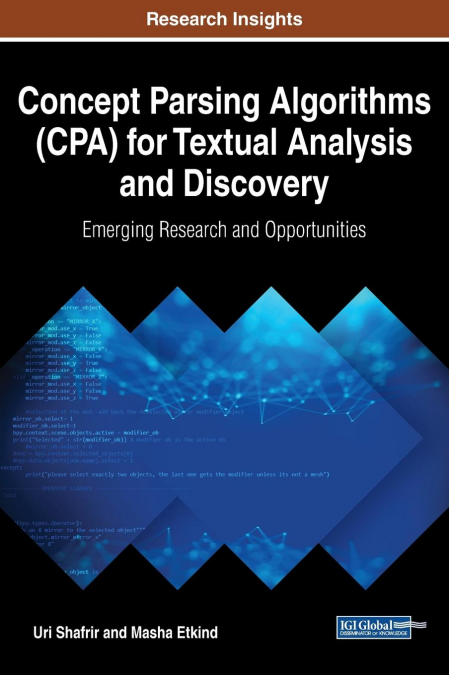
  • Concept Parsing Algorithms (CPA) for Textual Analysis and Discovery
    Masha Etkind / Uri Shafrir
    Text analysis tools aid in extracting meaning from digital content. As digital text becomes more and more complex, new techniques are needed to understand conceptual structure. Concept Parsing Algorithms (CPA) for Textual Analysis and Discovery: Emerging Research and Opportunities provides an innovative perspective on the application of algorithmic tools to study unstructured d...
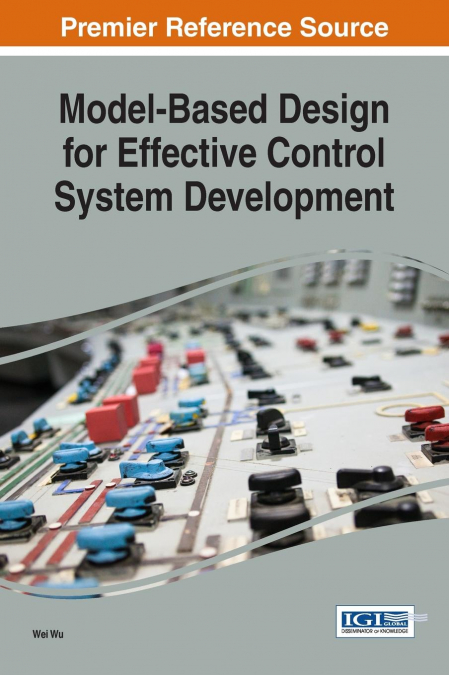
  • Model-Based Design for Effective Control System Development
    Wei Wu
    Control systems are an integral aspect of modern society and exist across numerous domains and applications. As technology advances more and more, the complexity of such systems continues to increase exponentially. Model-Based Design for Effective Control System Development is a critical source of scholarly information on model-centric approaches and implementations for control...
  • Verification, Validation and Testing in Software Engineering
    ...