 Librería Samer Atenea
 Kálamo Books
 Librería Elías (Asturias)
 Librería Kolima (Madrid)
 Librería Proteo (Málaga)
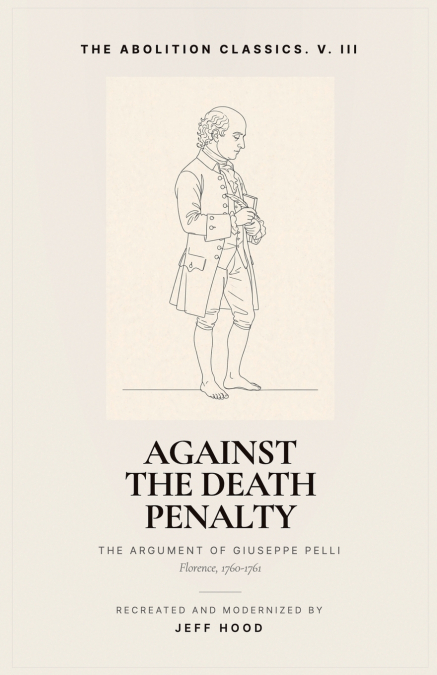
Three years before Cesare Beccaria published the book that changed European criminal law, a Florentine civil servant sat down and wrote the first systematic case against the death penalty in the modern West.Then he stopped. He never finished it. He never published it. The manuscript sat in a family archive for more than two centuries before scholars found it and understood what they had.Giuseppe Pelli built his argument as a series of proofs, each one attacking a different foundation on which the claimed right to execute might rest. Natural law: the right cannot come from there. The social contract: a government cannot receive a power that no one who created it ever held. Necessity: confinement protects the public just as well. Deterrence: the evidence does not support it. Retaliation: applied consistently, it would have us torture torturers.He was a devout Catholic, and he did something with that no one else in the tradition had done. He took the doctrine of original sin - the standard theological justification for punishing criminals - and turned it against the court. If we are all fallen, then so are the judges and the juries and the witnesses. A fallen court needs a punishment it can take back. Death is the one punishment it cannot.This book is not a translation. It is a recreation of Pelli’s argument in new words, worked out at a length he never reached, and then brought into conversation with capital punishment in the United States in 2026. A second part sets each of his proofs beside the American death penalty as it operates now.THE ABOLITION CLASSICS · V. 3 The texts that built the case against the death penalty