
Inicio > Matemáticas y ciencia > Química > Advances in Plastic Forming of Metals
Advances in Plastic Forming of Metals

Advances in Plastic Forming of Metals

Advances in Plastic Forming of Metals


67,92 €
IVA incluido
Disponible
Editorial:
MDPI AG
Año de edición:
2018
Materia
Química
ISBN:
9783038972600
67,92 €
IVA incluido
Disponible

Selecciona una librería:

  • Librería Samer Atenea
  • Librería Aciertas (Toledo)
  • Kálamo Books
  • Librería Perelló (Valencia)
  • Librería Elías (Asturias)
  • Donde los libros
  • Librería Kolima (Madrid)
  • Librería Proteo (Málaga)

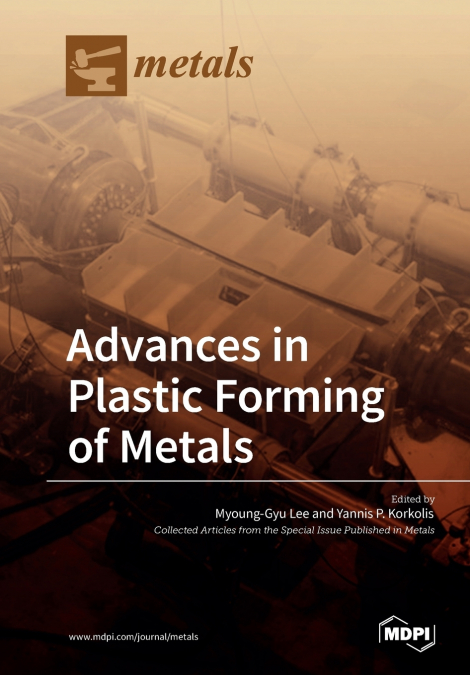
The forming of metals through plastic deformation comprises a family of methods that produce components through the re-shaping of input stock, oftentimes with little waste. Therefore, forming is one of the most efficient and economical manufacturing process families available. A myriad of forming processes exist in this family. In conjunction with their countless existing successful applications and their relatively low energy requirements, these processes are an indispensable part of our future. However, despite the vast accumulated know-how, research challenges remain, be they related to the forming of new materials (e.g., for light-weight transportation applications), pushing the boundaries of what is doable, reducing the intermediate steps and/or scrap, or further enhancing the environmental friendliness. The purpose of this book is to collect expert views and contributions on the current state-of-the-art of plastic forming, thus highlighting contemporary challenges and offering ideas and solutions.


Artículos relacionados

  • Suzuki-Miyaura Cross-Coupling Reaction and Potential Applications
    Suzuki–Miyaura cross-coupling remains a powerful tool in organic synthesis for C–C bond formation and has various industrial applications, for example, the synthesis of pharmaceuticals and materials. Intensive research efforts are being made into finding ways of improving and expanding the scope of this process, and the development of more efficient catalytic systems for this e...
    Disponible

    67,89 €

  • Catalysis for Low Temperature Fuel Cells
    Today, the development of active and stable catalysts still represents a challenge to overcome in the research field of low temperature fuel cells. Operation at low temperatures demands the utilization of highly active catalysts to reduce the activation energy of the electrochemical reactions involved at the electrodes, and thus obtain practical performances and high efficienci...
    Disponible

    59,74 €

  • Trends in Microextraction Techniques for Sample Preparation
    Micro-extraction techniques in sample preparation are gaining interest among analytical chemists as they comply with green analytical chemistry demands and ensure environmental protection and public safety. Savings in cost and time are considered as valuable benefits by using novel micro-extraction approaches in sample handling. Selectivity, sensitivity and lower detection limi...
    Disponible

    59,87 €

  • Advances and Applications of Nano-antimicrobial Treatments
    Nowadays, great concerns are associated with the resistance demonstrated by many microorganisms towards the conventional antibiotic therapies. The failure of traditional antimicrobials, and the increasing healthcare costs, have encouraged scientific research and the development of novel antimicrobial agents. Particularly, there is a great deal of interest in nanotechnologies an...
    Disponible

    51,68 €

  • Handbook of Research on Uncovering New Methods for Ecosystem Management through Bioremediation
    Kajal Srivastava / Shivom Singh
    Maintaining and preserving the environment is a crucial consideration in an era where climate change and rising sea levels are common knowledge. It is important for researchers and developers alike to explore potential solutions for a steadily warming world. The Handbook of Research on Uncovering New Methods for Ecosystem Management through Bioremediation focuses on the agricul...
  • Structural Design and Properties of Coordination Polymers
    The assembly of organic ligands and metal centres yields coordination polymers, many of which find applications in conductivity, catalysis, magnetism, gas sorption, biological sensing and luminescence. The structure and topology of coordination polymers may be manipulated by changing the reaction conditions, leading to a large variety of structurally and topologically unique pr...
    Disponible

    43,77 €