 Librería Samer Atenea
 Kálamo Books
 Librería Elías (Asturias)
 Librería Kolima (Madrid)
 Librería Proteo (Málaga)
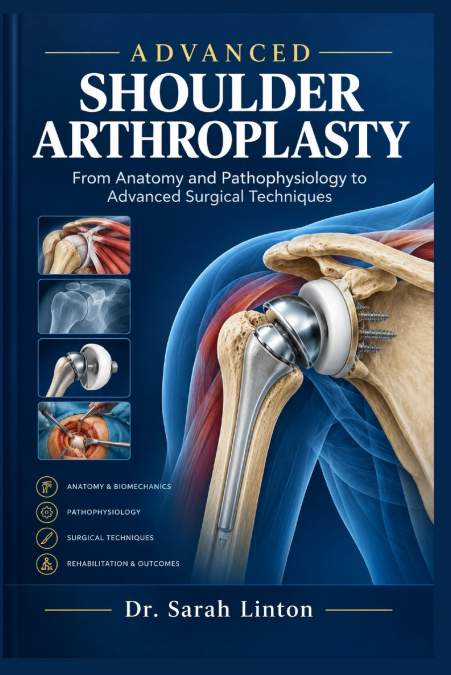
Shoulder arthroplasty has evolved into a sophisticated field of reconstructive orthopedics in which successful outcomes depend on far more than implant selection alone. Accurate diagnosis, careful assessment of bone and soft-tissue pathology, three-dimensional understanding of shoulder biomechanics, precise component positioning, appropriate implant selection, and thoughtful management of complications all contribute to durable function.This comprehensive guide to shoulder arthroplasty provides a clinically focused and surgically oriented examination of modern shoulder replacement. It addresses the full pathway from patient evaluation and preoperative planning through operative technique, postoperative management, complication recognition, and revision reconstruction.The book examines anatomic total shoulder arthroplasty, reverse total shoulder arthroplasty, hemiarthroplasty, resurfacing procedures, fracture-related arthroplasty, and revision surgery. Particular attention is given to the factors that determine procedure selection, including glenoid morphology, rotator cuff integrity, bone loss, deformity, instability, patient activity, fracture patterns, and previous surgical history.Detailed discussion of imaging and preoperative planning explains how radiographs, CT, and selected advanced imaging studies can be integrated into surgical decision-making. Implant design and biomechanics are explored alongside practical considerations such as humeral version, inclination, glenoid component positioning, baseplate fixation, glenosphere configuration, soft-tissue tension, and restoration of functional shoulder mechanics.The operative sections address exposure, component preparation and implantation, subscapularis management, glenoid reconstruction, humeral preparation, balancing, fixation, and procedure-specific technical considerations. Reverse shoulder arthroplasty receives particular attention because of its distinctive biomechanics and its expanding role in rotator cuff deficiency, fracture reconstruction, complex arthritis, and revision surgery.Complication management is treated as a central component of contemporary shoulder arthroplasty practice. The book discusses infection, instability, component loosening, periprosthetic fracture, nerve injury, stiffness, subscapularis failure, glenoid bone loss, scapular notching, acromial and scapular spine fractures, implant malposition, polyethylene-related problems, and other causes of painful or failed arthroplasty. Revision strategies are presented with emphasis on identifying the underlying failure mechanism and developing a reconstruction plan appropriate to the available bone and soft-tissue envelope.Designed for orthopedic residents, fellows, shoulder and elbow surgeons, sports medicine specialists, and clinicians involved in the care of patients undergoing shoulder replacement, this book emphasizes practical reasoning and technically relevant knowledge. Rather than treating shoulder arthroplasty as a single procedure, it presents it as a continuum of diagnostic assessment, biomechanical planning, surgical execution, rehabilitation, surveillance, and revision.