 Librería Samer Atenea
 Kálamo Books
 Librería Elías (Asturias)
 Librería Kolima (Madrid)
 Librería Proteo (Málaga)
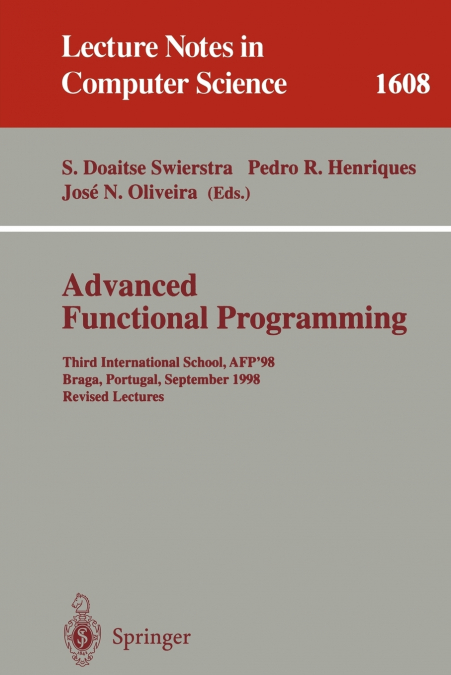
Inthisvolumeyouwill?ndthelecturenotescorrespondingtothepres- rd tationsgivenatthe3 summerschoolonAdvancedFunctionalProgramming, heldinBraga,PortugalfromSeptember12-19,1998. ThisschoolwasprecededbyearlieronesinB?astad(1995,Sweden,LNCS925) andOlympia,WA(1996,USA,LNCS1129). Thegoalofthisseriesofschoolsis tobringrecentdevelopmentsintheareaoffunctionalprogrammingtoalarge groupofstudents. Thenotesarepublishedinordertoenableindividuals,small studygroups,andlecturerstobecomeacquaintedwithrecentworkinthefast developingareaoffunctionalprogramming. Whatmadethisschoolparticularlyinterestingwasthefactthatalllectures introducedusefulsoftware,thatwasusedbythestudentsintheclassestoget hands-onexperiencewiththesubjectstaught. Weurgereadersofthisvolumeto downloadthelatestversionofthissoftwarefromtheInternetandtrytodothe exercisesfromthetextthemselves;theproofoftheprogramisinthetyping. The?rstlecture,onSortingMorphisms,servesasagentleintroductiontothe thingstocome. Ifyouhavealwaysbeenafraidoftheword'morphism',andyou havebeenwonderingwhatcatamorphisms,anamorphisms,hylomorphims,and paramorphimswereabout,thisisthepapertoread?rst;youwilldiscoverthat theyaremerelynamesforrecursionpatternsthatoccuroverandoveragainwhen writingfunctionalprograms. Thealgorithmsinthepaperareallaboutsorting, andsinceyouarelikelytoknowthosealgorithmsbyheartalready,seeingthem structuredandanalyzedinanovelwayshouldserveasamotivationtoreadon tothesecondlecture. Thesecondlecture,onGenericProgramming,isalmostabookinabook. ThenotescanbeseenastheculminatingpointoftheSTOP-project,sponsored bytheDutchgovernmentattheendofthe80’sandthebeginningofthe90’s. Its overallgoalwasthedevelopmentofacalculationalwayofderivingprograms. The projecthasprovideddeeperinsightintorealfunctionalprogrammingandinto thetheorybehindmanythingscommonlywrittenbyfunctionalprogrammers. Oneofthemainachievementsoftheprojecthasbeentomakepeopleaware ofthefactthatmanyalgorithmscanbedescribedinadata-independentway. ThePolyPsystemintroducedinthesenotesisoneofthetranslationstothe Haskell-worldofthistheoreticalunderpinning. Thethirdlecture,onGenericProgramTransformation,canalsobeseenas anapplicationofthetheoryintroducedinlecturetwo. Manye?ciency-improving programtransformationscanbeperformedinamechanicalway,andthesewould nothavebeenpossiblewithoutinsightintothecorrectnessofsuchtransfor- tionsgainedinthelectureonGenericProgramming. Thefourthlecture,onDesigningandImplementingCombinatorLanguages, introducesaneasytowriteformalismforwritingdownthecatamorphismsint- ducedinearlierchapters. Itisshownhowquitecomplicatedcatamorphisms,that at?rstsightseemratherforbiddingbymakingextensiveuseofhigher-orderdo- VI Preface mains,canactuallybedevelopedinastep-wisefashion,usinganattributegr- marview;itisfurthermoreshownhowtorelatethiswayofprogrammingwith conceptsfromtheobject-orientedworldthusmakingclearwhatthestrengths andweaknessesofeachworldare. The?fthlecture,titledUsingMetaML:AStagedProgrammingLanguage, introducestheconceptofpartialevaluation. Itservesasanotherinstanceof thequestfor'themostgenericofwritingprogramsatthelowestcost'. The stagingtechniquesshowhowcoststhatwereintroducedbyaddingextralevels ofabstraction,maybemovedfromrun-timetocompile-time. Ithasbeencommonknowledgetousersofmodernfunctionallanguagesthat thetypesystemcanbeagreathelpinshorteningprogramsandreducingerrors. Intheextremeonemightseeatypeasapredicatecapturingtheproperties ofanyexpressionwiththattype. InthesixthlectureonCayenne-Spiceup yourProgrammingwithDependentTypesitisshowninwhatdirectionfunct