Inicio > Humanidades > Historia > Historia militar > ADMIRALTY REVIEW OF GERMAN CRUISER WARFARE 1914-1918
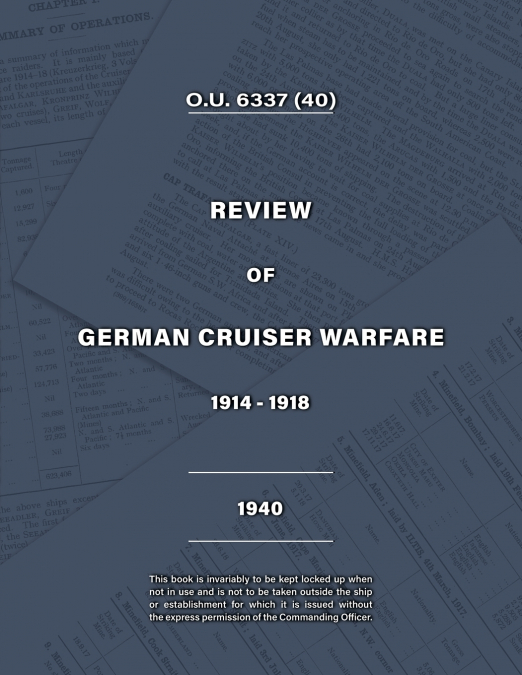
ADMIRALTY REVIEW OF GERMAN CRUISER WARFARE 1914-1918

ADMIRALTY REVIEW OF GERMAN CRUISER WARFARE 1914-1918

Vice-Admiral Kenneth G. B. Dewar

25,80 €
IVA incluido
Disponible
Editorial:
Naval & Military Press
Año de edición:
2026
Materia
Historia militar
ISBN:
9781474542609
25,80 €
IVA incluido
Disponible

Selecciona una librería:

  • Librería Samer Atenea
  • Kálamo Books
  • Librería Elías (Asturias)
  • Librería Kolima (Madrid)
  • Librería Proteo (Málaga)

During World War I, the Imperial German Navy deployed surface vessels-warships, converted liners, and freighters, as commerce raiders to disrupt Allied shipping in its Handelskrieg ('Trade War'). At the outbreak of hostilities, Germany had two armoured cruisers, six light cruisers, and four gunboats stationed in colonies and neutral ports worldwide. The East Asia Squadron, under Vice Admiral Maximilian von Spee, was the centerpiece, comprising SMS Scharnhorst, Gneisenau, Emden, Leipzig, and Nürnberg. Emden achieved remarkable success raiding Indian Ocean shipping before being destroyed at the Battle of Cocos in November 1914. Spee’s squadron defeated the British at Coronel in November but was annihilated at the Falkland Islands in December; only Dresden survived, eventually running aground in March 1915. Other cruisers, including Karlsruhe and Königsberg, conducted raiding operations with mixed success; Karlsruhe captured 16 ships before an internal explosion sank her in November 1914.Fast passenger liners were converted into auxiliary cruisers, though the British blockade limited operations. Kronprinz Wilhelm was the most effective, taking thirteen prizes over eight months before internment in the United States. Prinz Eitel Friedrich captured eleven ships, while others, like Kaiser Wilhelm der Grosse and Cap Trafalgar, were quickly sunk.After initial setbacks, Germany turned to disguised freighters as long-range raiders. SMS Möwe and Wolf conducted extended campaigns, sinking and capturing dozens of ships while evading the Royal Navy. Möwe even outfitted prizes as auxiliary raiders. Sailing raider Seeadler famously sank 13 vessels before wrecking on a reef. By 1917, surface raiding largely ceased, supplanted by unrestricted submarine warfare, which inflicted severe losses on Allied shipping but provoked neutral nations, most notably the United States, to enter the war.Despite isolated successes, German commerce raiding failed strategically, as Allied trade adapted, and the high-risk surface raiders were progressively eliminated

Artículos relacionados

  • Waterloo Betrayed
    Stephen M. Beckett / Stephen MBeckett
    THIS BOOK HAS BEEN SUPERCEDEDSee Operations of the Armée du Nord : 1815, The Analysis for the definitive guide of French operations in 1815.   Discover why Napoleon really lost the Waterloo Campaign Napoleon was betrayed during 1815 There is no doubt of this. The Traitors admitted as much, and the Allied powers documented their acts. In the immediate aftermath of Napoleon's...
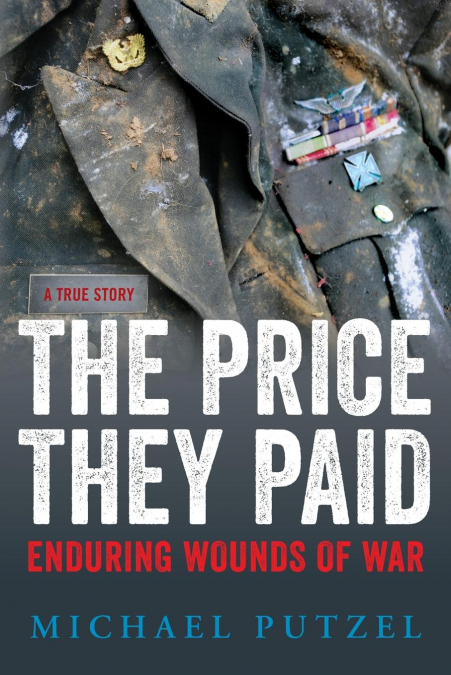
  • The Price They Paid
    Michael Putzel
    The Price They Paid is the stunning and dramatic true story of a legendary helicopter commander in Vietnam and the flight crews that followed him into the most intensive helicopter warfare ever-and how that brutal experience has changed their lives in the forty years since the war ended. ...
    Disponible

    12,78 €

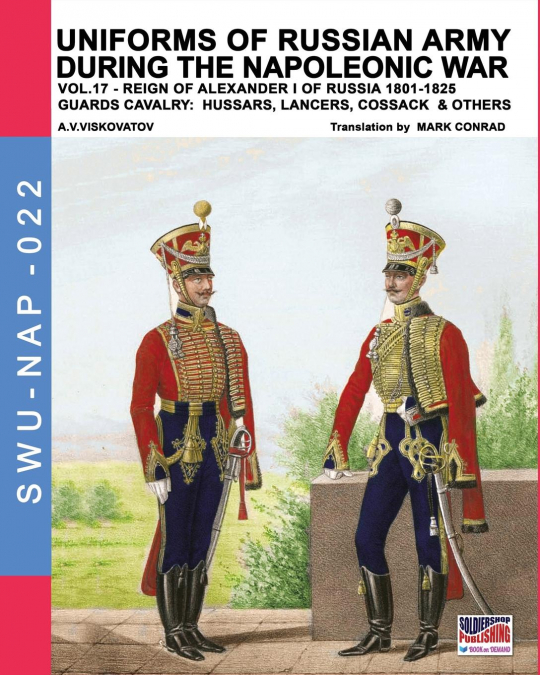
  • Uniforms of Russian army during the Napoleonic war vol.17
    Aleksandr Vasilevich Viskovatov / Mark Conrad
    This volume is related to the Russian Army during the zar Alexander I era, and are about the Guard cavalry regiments (part 1). Compiled at Saint Petersburg during the year from 1837 and 1851, the Historical Description of the Clothing and Arms of the Russian Army has had an enormous impact and great importance for the study on the history of Russian costume and uniformology dev...
    Disponible

    45,03 €

  • Cyber Warfare and Cyber Terrorism
    ...
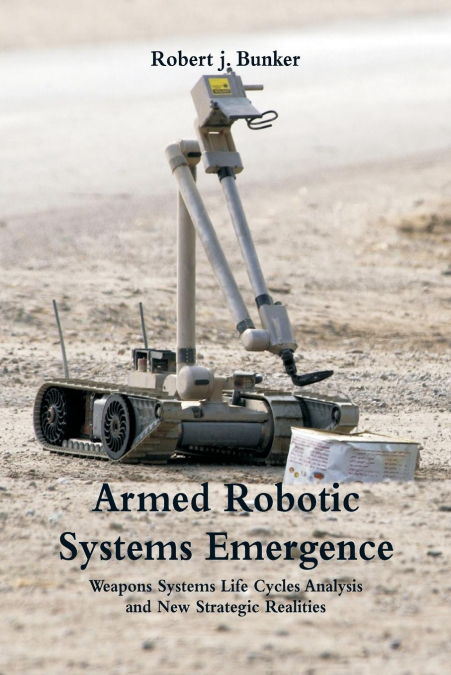
  • Armed Robotic Systems Emergence
    Robert j. Bunker / Robert jBunker
    The fielding of armed robotic systems--droids and drones that are teleoperated, semi-autonomous, and even autonomous--has been slowly but surely transitioning from pure science fiction into military reality on the battlefields of the early 21st century. These systems currently have no artificial intelligence (AI) whatsoever and, in most cases, are simply operated by soldiers (a...
    Disponible

    9,40 €

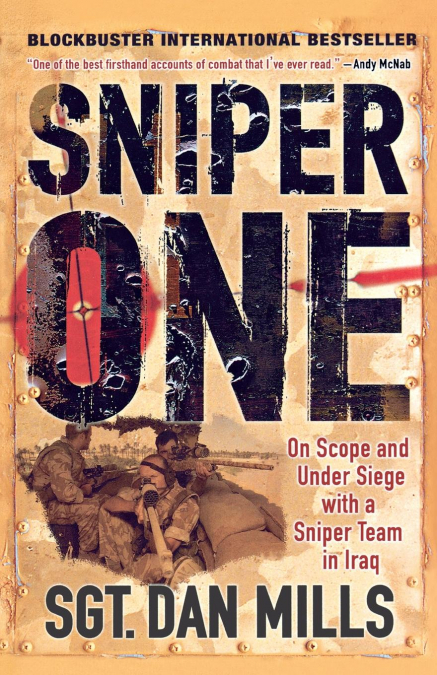
  • SNIPER ONE
    DAN MILLS
    ...
    Disponible

    20,29 €