
Inicio > Humanidades > Filosofía > Active Cognition
Active Cognition

Active Cognition


134,34 €
IVA incluido
Disponible
Editorial:
Springer Nature B.V.
Año de edición:
2021
Materia
Filosofía
ISBN:
9783030353063
134,34 €
IVA incluido
Disponible

Selecciona una librería:

  • Librería Samer Atenea
  • Librería Aciertas (Toledo)
  • Kálamo Books
  • Librería Perelló (Valencia)
  • Librería Elías (Asturias)
  • Donde los libros
  • Librería Kolima (Madrid)
  • Librería Proteo (Málaga)

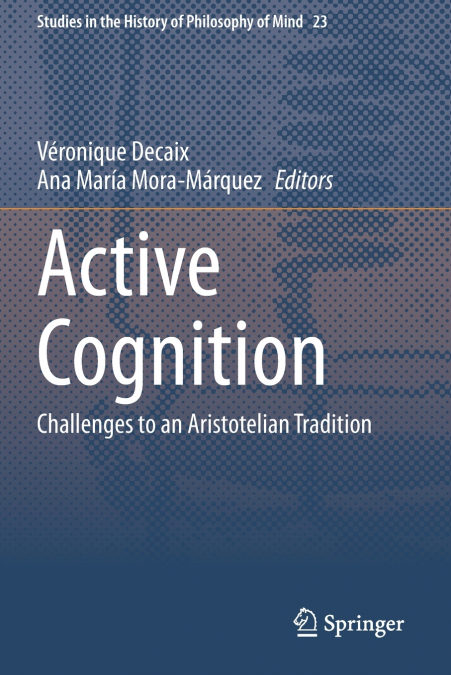
This edited work draws on a range of contributed expertise to trace the fortune of an Aristotelian thesis over different periods in the history of philosophy. It presents eight cases of direct or indirect challenges to the Aristotelian passive account of human cognition, taking the reader from late antiquity to the 20th century. Chapters analyse the (often indirect) effect of Aristotle’s account of cognition on later periods. In his influential De anima, Aristotle describes human cognition, both sensitive and intellectual, as the reception of a form in the cognitive subject. Aristotle’s account has been commonly interpreted as fundamentally passive - the cognitive subject is a passive actor upon which a cognitive process is acted by the object. However, at least from the time of Alexander of Aphrodisias onwards, this interpretation has been challenged by authors who posit a fundamental active aspect of cognition. Readers will discover how one or more of three concerns - ontological superiority, direct realism and moral responsibility - drive the active accounts of cognition. Contributed chapters from top scholars examine how these three concerns lead thinkers to take issue with the idea that cognition is a passive process. The authors consider Jesuit accounts of cognition, Malebranche on judgment, and Wittgenstein on perception, as well as Stumpf on active cognition, among other relevant works.This book is ideally suited to scholars of philosophy, especially those with an interest in medieval epistemology, the influence of Aristotle, philosophy of mind and theories of cognition.
Artículos relacionados

  • Introduction to a Future Way of Thought
    Kostas Axelos / Kenneth Mills
    'Technologists only change the world in various ways in generalized indifference; the point is to think the world and interpret the changes in its unfathomability, to perceive and experience the difference binding being to the nothing.'Anticipating the age of planetary technology Kostas Axelos, a Greek-French philosopher, approaches the technological question in this book, firs...
    Disponible

    18,58 €

  • Capsule
    John Kenneth Press
    Join John and Adam as they wander the mean streets of Japan on a psychedelic fueled search for identity. While fun for the average reader, this book could also serve as a philosphy textbook because of its ordered exploration of sources of identity. Ultimately this trip through nationalist attacks, sex, and drugs, will take you to a better understanding of yourself and your pl...
    Disponible

    11,51 €

  • If you look at it long enough...
    Paul Hallam
    Originally written for an academic journal, If you look at it long enough... is primarily a personal account of Paul Hallam’s recollections of “self-abuse” through the consumption of porn over several decades. Challenging the familiar form of an “academic essay,” this autobiographical narrative raises several questions in relation to our contemporary morals related to sex in ge...
    Disponible

    11,30 €

  • The Teachers of Gurdjieff
    Rafael Lafort / Rafael Lefort
    When The Teachers of Gurdjieff was first published more than 50 years ago, it made a considerable stir. George Ivanovich Gurdjieff had been one of the most famous mystics in the West in the first half of the 20th century - a teaching master who had many fashionable and influential pupils. He had a striking appearance and manner of teaching, and his teaching proved to be very in...
    Disponible

    20,45 €

  • Manifesto of the Communist Party
    Karl Marx
    The Communist Manifesto was first published on February 21, and it is one of the world’s most influential political tracts. Commissioned by the Communist League and written by communist theorists Karl Marx and Friedrich Engels, it laid out the League’s purposes and program. The Manifesto suggested a course of action for a proletarian (working class) revolution to overthrow the ...
  • The Art of Literature
    Arthur Schopenhauer
    Collected here are eight short essays, On Authorship, On Style, On the Study of Latin, On Men of Learning, On Thinking for Ones Self, On Criticism, On Reputation, On Genius, by the world renowned philosopher Arthur Achopenhauer. ...