
Inicio > Derecho > Derecho internacional > Abuse of EU Law and Regulation of the Internal Market
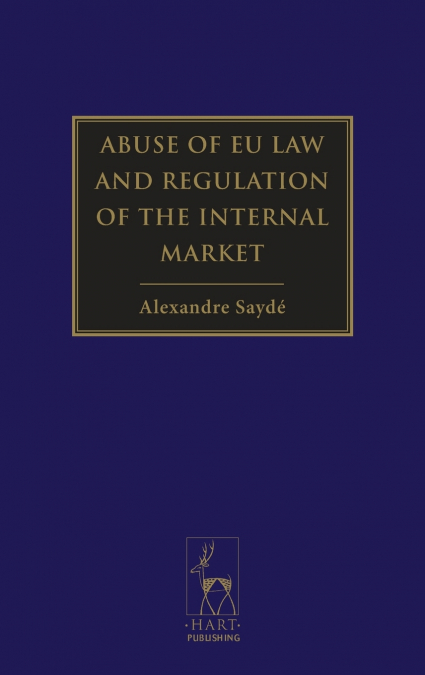
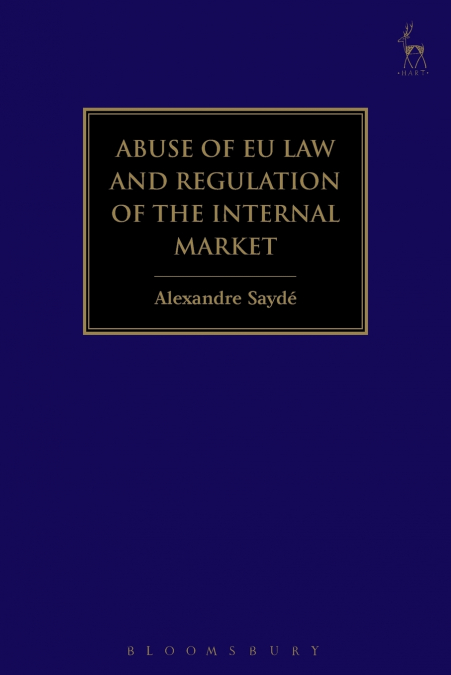
Abuse of EU Law and Regulation of the Internal Market

Abuse of EU Law and Regulation of the Internal Market

Alexandre Saydé

69,45 €
IVA incluido
Disponible
Editorial:
Bloomsbury Publishing plc
Año de edición:
2016
Materia
Derecho internacional
ISBN:
9781509907403
69,45 €
IVA incluido
Disponible

Selecciona una librería:

  • Librería Samer Atenea
  • Librería Aciertas (Toledo)
  • Kálamo Books
  • Librería Perelló (Valencia)
  • Librería Elías (Asturias)
  • Donde los libros
  • Librería Kolima (Madrid)
  • Librería Proteo (Málaga)

How can the concept of abuse of European Union law - which can be defined as undesirable choice of law artificially made by a private citizen - generate so much disagreement among equally intelligent individuals? Seeking to transcend the classical debate between its supporters and adversaries, the present study submits that the concept of abuse of EU law is located on three major fault-lines of EU law, which accounts for the well-established controversies in the field.The first fault-line, which is common to all legal orders, opposes legal congruence (the tendency to yield equitable legal outcomes) to legal certainty (the tendency to yield predictable legal outcomes). Partisans of legal congruence tend to advocate the prohibition of abuses of law, whereas partisans of legal certainty tend to oppose it.The second fault-line is specific to EU law and divides two conceptions of the regulation of the internal market. If economic integration is conceived as the promotion of cross-border competition among private businesses (the paradigm of ’regulatory neutrality’), choices of law must be proscribed as abusive, for they distort business competition. But if economic integration is intended to promote competition among Member States (the paradigm of ’regulatory competition’), choices of law by EU citizens represent a desirable process of arbitrage among national laws.The third and final fault-line corresponds to the tension between two orientations of the economic constitution of the European Union, namely the fear of private power and the fear of public power. Those who fear private power most tend to endorse the prohibition of abuses of law, whereas those who fear public power most tend to reject it.Seen in this way, the concept of abuse of EU law offers a forum in which fundamental questions about the nature and function of EU law can be confronted and examined in a new light.In May 2013, the thesis that this book was based on won the First Edition of the European Law Faculties Association Award for Outstanding Doctoral Thesis.
Artículos relacionados

  • Comparative regulation, economic analysis, and applications of private equity in the united states and european union
    Irini Liakopoulou
    The present work examines the economics and legal doctrine of private equity. After a consideration of private equity’s origins, the book will explore the evolution of private equity in the United States and Europe. The reference economic model then will be reconstructed, with particular attention to financial flows to and from private equity firms and funds. This reconstructio...
  • Complicity in International Law
    Dimitris Liakopoulous
    Complicity in International Law aims to analyze questions arising from a state’s complicity in conflict with another state or an international organization. On the basis of international legal provisions, a state that assists the illicit fact of another state or an international organization in turn commits an offense if it is aware of the main fact and is bound by the same obl...
  • Command responsibility
    James B Whisker / Kevin R Spiker
    Command responsibility, or executive accountability, assumes that leaders are responsible for the actions of their subordinates. If subordinates misbehave, violate basic moral laws, transgress international law, or thwart international standards of behavior, their leader may be called before to justice. Standards that set the boundaries of human action have been evolving for ma...
  • International Organizations and Reparations
    Dimitris Liakopoulos
    In the first part of this book, noted legal scholar Dimtris Liakopoulos deals with reconstructing the legal regulatory framework governing human rights violations in the activities of organizations. After identifying rules that are generally applicable to organizations’ offenses and govern the profile of reparations, this study assesses primary rules that guarantee the right to...
  • International Organizations and Legal Sanctions Against Governments
    Dimitris Liakopoulos
    This book examines the relationship between governments and international organizations under international law. After surveying the policing powers of international organizations under international law, it illustrates some normative aspects of law that distinguish regulation from enforcement via study of recent legal cases before international judicial bodies. According to Di...
  • The EU Foreign Subsidies Regulation
    Andreas Reindl / Isabelle Van Damme
    'The EU Foreign Subsidies Regulation' is a pioneering manual authored by legal experts Andreas Reindl and Isabelle Van Damme. This essential guide, the first of its kind, is tailored for legal practitioners, offering a thorough exploration of the tools and mechanisms embedded within this novel European regulatory framework. The authors meticulously dissect the EU Foreign Subsid...

Otros libros del autor

  • Abuse of Eu Law and Regulation of the Internal Market
    Alexandre Sayde
    How can the concept of abuse of EU law - which can be defined as undesirable choice of law made by a private citizen - generate so much disagreement among equally intelligent individuals? Seeking to transcend the classical debate between its supporters and adversaries, this present study submits that the concept of abuse of EU law is located on three major fault-lines of EU law...