Inicio > Humanidades > Filosofía > A Treatise of Human Nature
A Treatise of Human Nature

A Treatise of Human Nature

A Treatise of Human Nature

David Hume

37,02 €
IVA incluido
Consulta disponibilidad
Editorial:
Brian Westland
Año de edición:
1839
Materia
Filosofía
ISBN:
9781774410745

Selecciona una librería:

  • Librería Samer Atenea

  • Kálamo Books
  • Librería Elías (Asturias)
  • Librería Kolima (Madrid)
  • Librería Proteo (Málaga)

A Treatise of Human Nature (1739–40) is a book by Scottish philosopher David Hume, considered by many to be Hume's most important work and one of the most influential works in the history of philosophy. The Treatise is a classic statement of philosophical empiricism, skepticism, and naturalism. In the introduction Hume presents the idea of placing all science and philosophy on a novel foundation: namely, an empirical investigation into human nature. Impressed by Isaac Newton's achievements in the physical sciences, Hume sought to introduce the same experimental method of reasoning into the study of human psychology, with the aim of discovering the "extent and force of human understanding". Against the philosophical rationalists, Hume argues that passion rather than reason governs human behaviour. He introduces the famous problem of induction, arguing that inductive reasoning and our beliefs regarding cause and effect cannot be justified by reason; instead, our faith in induction and causation is the result of mental habit and custom. Hume defends a sentimentalist account of morality, arguing that ethics is based on sentiment and passion rather than reason, and famously declaring that "reason is, and ought only to be the slave to the passions". Hume also offers a skeptical theory of personal identity and a compatibilist account of free will.Contemporary philosophers have written of Hume that "no man has influenced the history of philosophy to a deeper or more disturbing degree",[2] and that Hume's Treatise is "the founding document of cognitive science"[3] and the "most important philosophical work written in English." However, the public in Britain at the time did not agree, nor in the end did Hume himself agree, reworking the material in An Enquiry Concerning Human Understanding (1748) and An Enquiry Concerning the Principles of Morals (1751). In the Author's introduction to the former, Hume wrote:“Most of the principles, and reasonings, contained in this volume, were published in a work in three volumes, called A Treatise of Human Nature: a work which the Author had projected before he left College, and which he wrote and published not long after. But not finding it successful, he was sensible of his error in going to the press too early, and he cast the whole anew in the following pieces, where some negligences in his former reasoning and more in the expression, are, he hopes, corrected. Yet several writers who have honoured the Author’s Philosophy with answers, have taken care to direct all their batteries against that juvenile work, which the author never acknowledged, and have affected to triumph in any advantages, which, they imagined, they had obtained over it: A practice very contrary to all rules of candour and fair-dealing, and a strong instance of those polemical artifices which a bigotted zeal thinks itself authorized to employ. Henceforth, the Author desires, that the following Pieces may alone be regarded as containing his philosophical sentiments and principles.”

Artículos relacionados

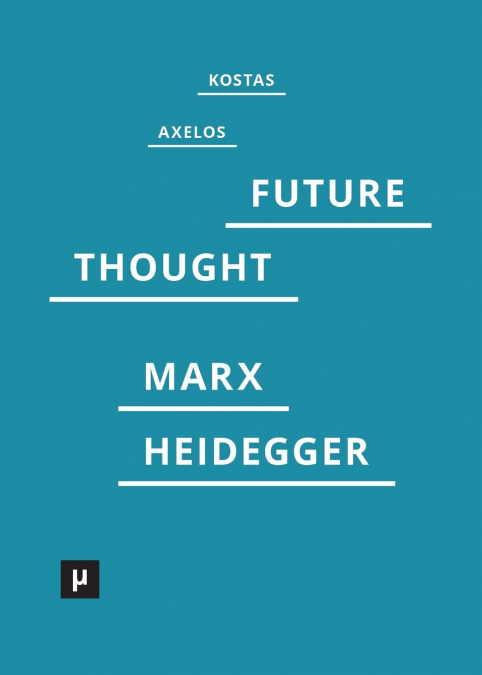
  • Introduction to a Future Way of Thought
    Kostas Axelos / Kenneth Mills
    'Technologists only change the world in various ways in generalized indifference; the point is to think the world and interpret the changes in its unfathomability, to perceive and experience the difference binding being to the nothing.'Anticipating the age of planetary technology Kostas Axelos, a Greek-French philosopher, approaches the technological question in this book, firs...
    Disponible

    20,64 €

  • Capsule
    John Kenneth Press
    Join John and Adam as they wander the mean streets of Japan on a psychedelic fueled search for identity. While fun for the average reader, this book could also serve as a philosphy textbook because of its ordered exploration of sources of identity. Ultimately this trip through nationalist attacks, sex, and drugs, will take you to a better understanding of yourself and your pl...
    Disponible

    13,44 €

  • If you look at it long enough...
    Paul Hallam
    Originally written for an academic journal, If you look at it long enough... is primarily a personal account of Paul Hallam’s recollections of “self-abuse” through the consumption of porn over several decades. Challenging the familiar form of an “academic essay,” this autobiographical narrative raises several questions in relation to our contemporary morals related to sex in ge...
    Disponible

    13,72 €

  • The Teachers of Gurdjieff
    Rafael Lafort / Rafael Lefort
    When The Teachers of Gurdjieff was first published more than 50 years ago, it made a considerable stir. George Ivanovich Gurdjieff had been one of the most famous mystics in the West in the first half of the 20th century - a teaching master who had many fashionable and influential pupils. He had a striking appearance and manner of teaching, and his teaching proved to be very in...
    Disponible

    22,79 €

  • Manifesto of the Communist Party
    Karl Marx
    The Communist Manifesto was first published on February 21, and it is one of the world’s most influential political tracts. Commissioned by the Communist League and written by communist theorists Karl Marx and Friedrich Engels, it laid out the League’s purposes and program. The Manifesto suggested a course of action for a proletarian (working class) revolution to overthrow the ...
  • The Art of Literature
    Arthur Schopenhauer
    Collected here are eight short essays, On Authorship, On Style, On the Study of Latin, On Men of Learning, On Thinking for Ones Self, On Criticism, On Reputation, On Genius, by the world renowned philosopher Arthur Achopenhauer. ...

Otros libros del autor

  • Tratado de la naturaleza humana
    David Hume
    ¿Qué hace convincente una creencia y por qué la razón cede tan a menudo ante los sentimientos? David Hume convierte estas preguntas cotidianas en una profunda indagación sobre el conocimiento, la acción y la moral.Publicado por primera vez entre 1739 y 1740, Tratado de la naturaleza humana busca comprender la mente mediante la experiencia y la observación. En sus tres libros, d...
  • Investigación sobre los principios de la moral
    David Hume
    ¿Qué hace que una acción merezca elogio: la razón, los sentimientos o sus efectos en los demás? David Hume sitúa los sentimientos humanos en el centro de la vida moral.En Investigación sobre los principios de la moral, Hume examina las cualidades que admiramos en nosotros mismos y en los demás. Su planteamiento gira en torno a la benevolencia, la justicia, la simpatía y la util...
  • Investigación sobre los principios de la moral: Letra Grande
    David Hume
    ¿Qué hace que una acción merezca elogio: la razón, los sentimientos o sus efectos en los demás? David Hume sitúa los sentimientos humanos en el centro de la vida moral.En Investigación sobre los principios de la moral, Hume examina las cualidades que admiramos en nosotros mismos y en los demás. Su planteamiento gira en torno a la benevolencia, la justicia, la simpatía y la util...
  • Diálogos sobre la religión natural
    David Hume
    ¿Apunta un universo ordenado a un diseñador divino, y qué nos dice su sufrimiento? Tres voces contrastantes ponen a prueba las afirmaciones de la fe y la razón.En Diálogos sobre la religión natural, David Hume explora si la observación y la argumentación pueden establecer la existencia y la naturaleza de Dios. Cleantes defiende la creencia mediante las pruebas del diseño en el ...
  • A Treatise of Human Nature
    David Hume
    What makes a belief convincing—and why does reason so often yield to feeling? David Hume turns these everyday questions into a searching inquiry into knowledge, action, and morality.First published in 1739–1740, A Treatise of Human Nature seeks to understand the mind through experience and observation. Across its three books—on understanding, the passions, and morals—Hume exami...
  • Dialogues Concerning Natural Religion
    David Hume
    Dialogues Concerning Natural Religion by David Hume is a landmark work of philosophy that explores the existence and nature of God through engaging conversations between three characters: Cleanthes, Demea, and Philo. Examining arguments from design, faith, skepticism, and reason, Hume challenges traditional religious beliefs while encouraging critical thinking about theology an...
    Disponible

    13,61 €