A Treatise of Human Nature

A Treatise of Human Nature

David Hume

0,00 €
IVA incluido
Consulta disponibilidad
Editorial:
Muze Publications
Año de edición:
2026
Materia
Ética y filosofía moral
ISBN:
9781811111550

Selecciona una librería:

  • Librería Samer Atenea

  • Kálamo Books
  • Librería Elías (Asturias)
  • Librería Kolima (Madrid)
  • Librería Proteo (Málaga)

What makes a belief convincing—and why does reason so often yield to feeling? David Hume turns these everyday questions into a searching inquiry into knowledge, action, and morality.First published in 1739–1740, A Treatise of Human Nature seeks to understand the mind through experience and observation. Across its three books—on understanding, the passions, and morals—Hume examines the impressions and ideas that make up thought, the habits that sustain belief, and the feelings that shape conduct. His account of cause and effect asks whether our expectations rest on rational proof or on patterns we have learned to trust.The inquiry reaches beyond knowledge to the forces that move us. Hume challenges the view that reason alone directs action and explores the role of sympathy in moral judgment. His discussions of personal identity, virtue, and justice make the work both a landmark of philosophical empiricism and a lasting provocation: how much of what we take for certainty depends on the workings of the mind?What readers find inside:Impressions and ideas — Hume traces thought to experience and distinguishes vivid perceptions from their less forceful counterparts.Causation and belief — Habit helps explain why we expect familiar sequences of events to continue.Personal identity — The search for a lasting self raises difficult questions about perception and continuity.Reason and passion — The analysis of motivation challenges the idea that reasoning alone can move us to act.Morality and justice — Moral sentiment, sympathy, and social conventions help explain judgments of virtue and obligation.This work will reward philosophy students, readers drawn to the history of psychology, and anyone interested in the relationship between evidence, emotion, and ethical life. Its questions remain pressing wherever people debate what counts as knowledge or what makes an action right.Begin an encounter with Hume’s arguments and reconsider the foundations of your own beliefs. 10

Artículos relacionados

  • Ka Ab Ba Building The Lighted Temple
    Dr Terri R. Nelson / Dr Terri RNelson
    The book KaAbBa Building The Lighted Temple/Metaphysical Keys to the Tree of Life draws a circle that is inclusive of the Afrikan origin of the Ancient Kemetic/Egyptian wisdom. It reveals the undeniable root and link of Ancient Africa to all the religious systems that would develop worldwide. This book is explosive in its power to convey the meaning of KaAbBa, the Medu Neter  (...
    Disponible

    45,14 €

  • Technoethics and the Evolving Knowledge Society
    Rocci Luppicini
    Recently, there has been a major push to rediscover the ethical dimension of technology across the sciences, social sciences, and humanities. Technoethics and the Evolving Knowledge Society: Ethical Issues in Technological Design, Research, Development, and Innovation examines human processes and practices connected to technology embedded within social, political, and moral sph...
  • Kant
    Immanuel Kant
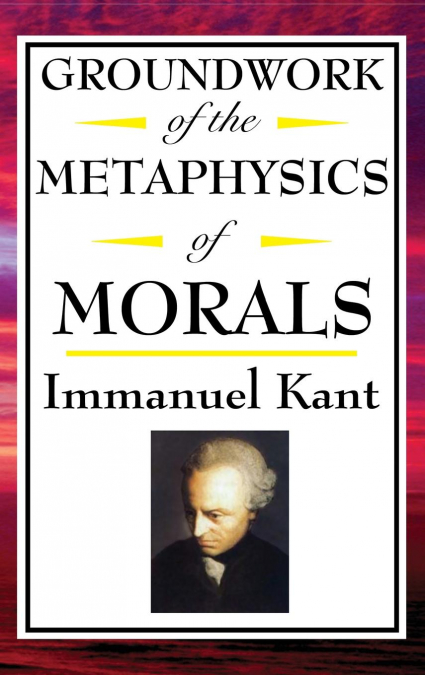
    Kant’s Groundwork of the Metaphysics of Morals is one of the most important works in modern moral philosophy. It belongs beside Plato, Aristotle, Machiavelli, and Hobbes. Here Kant sets out to articulate and defend the Categorical Imperative - the fundamental principle that underlies moral reasoning - and to lay the foundation for a comprehensive account of justice and human vi...
  • On the Duty of Civil Disobedience
    HENRY DAVID THOREAU
    Civil Disobedience argues that citizens should not permit their governments to overrule their consciences, and that they have a duty to avoid allowing their acquiescence to enable the government to make them the agents of injustice. Thoreau was motivated in part by his disgust with slavery and the Mexican-American War, but the sentiments he expresses here are just as pertinent ...
  • Beyond Good and Evil
    Friedrich Nietzsche
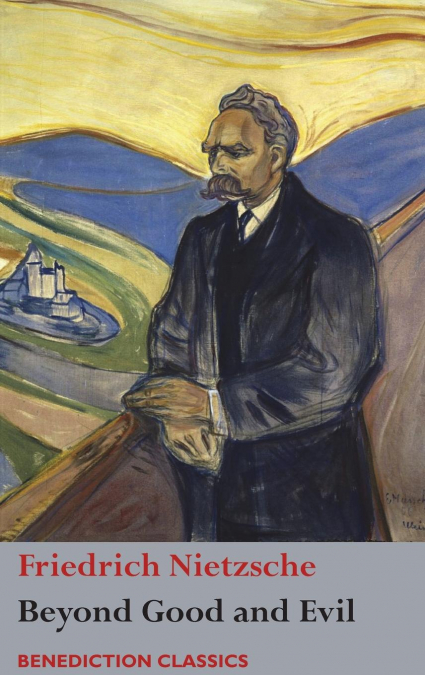
    Nietzsche, though primarily a philosopher, wrote widely on art, philology, history, religion, tragedy, culture, and science.  In 1886, at the height of his powers, he published Beyond Good and Evil.  Here he examines much of the best of human thought--dogmatic philosophy, Judeo-Christian morality, science and democracy – and finds it lacking.  Rejecting “slave-morality” he pres...
  • Beyond Good and Evil
    Friedrich Nietzsche
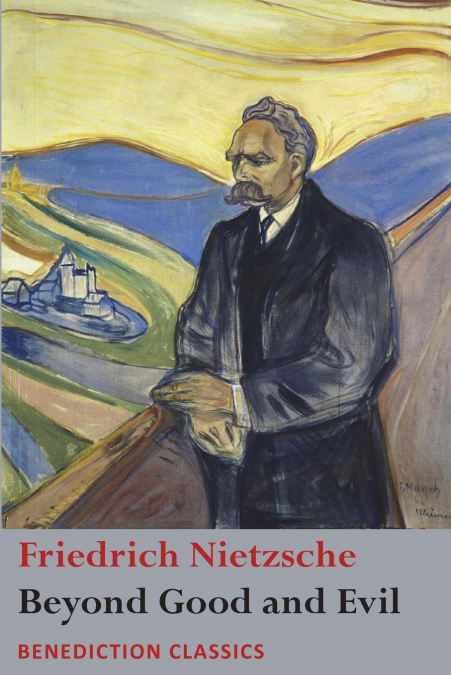
    Nietzsche, though primarily a philosopher, wrote widely on art, philology, history, religion, tragedy, culture, and science.  In 1886, at the height of his powers, he published Beyond Good and Evil.  Here he examines much of the best of human thought--dogmatic philosophy, Judeo-Christian morality, science and democracy – and finds it lacking.  Rejecting “slave-morality” he pres...
    Disponible

    10,94 €

Otros libros del autor

  • Tratado de la naturaleza humana
    David Hume
    ¿Qué hace convincente una creencia y por qué la razón cede tan a menudo ante los sentimientos? David Hume convierte estas preguntas cotidianas en una profunda indagación sobre el conocimiento, la acción y la moral.Publicado por primera vez entre 1739 y 1740, Tratado de la naturaleza humana busca comprender la mente mediante la experiencia y la observación. En sus tres libros, d...
  • Investigación sobre los principios de la moral
    David Hume
    ¿Qué hace que una acción merezca elogio: la razón, los sentimientos o sus efectos en los demás? David Hume sitúa los sentimientos humanos en el centro de la vida moral.En Investigación sobre los principios de la moral, Hume examina las cualidades que admiramos en nosotros mismos y en los demás. Su planteamiento gira en torno a la benevolencia, la justicia, la simpatía y la util...
  • Investigación sobre los principios de la moral: Letra Grande
    David Hume
    ¿Qué hace que una acción merezca elogio: la razón, los sentimientos o sus efectos en los demás? David Hume sitúa los sentimientos humanos en el centro de la vida moral.En Investigación sobre los principios de la moral, Hume examina las cualidades que admiramos en nosotros mismos y en los demás. Su planteamiento gira en torno a la benevolencia, la justicia, la simpatía y la util...
  • Diálogos sobre la religión natural
    David Hume
    ¿Apunta un universo ordenado a un diseñador divino, y qué nos dice su sufrimiento? Tres voces contrastantes ponen a prueba las afirmaciones de la fe y la razón.En Diálogos sobre la religión natural, David Hume explora si la observación y la argumentación pueden establecer la existencia y la naturaleza de Dios. Cleantes defiende la creencia mediante las pruebas del diseño en el ...
  • Dialogues Concerning Natural Religion
    David Hume
    Dialogues Concerning Natural Religion by David Hume is a landmark work of philosophy that explores the existence and nature of God through engaging conversations between three characters: Cleanthes, Demea, and Philo. Examining arguments from design, faith, skepticism, and reason, Hume challenges traditional religious beliefs while encouraging critical thinking about theology an...
    Disponible

    13,61 €

  • Dialogues Concerning Natural Religion
    David Hume
    Dialogues Concerning Natural Religion by David Hume is a landmark work of Enlightenment philosophy that explores the rational basis of religious belief through a compelling series of conversations between three fictional interlocutors. Examining arguments for the existence of God-particularly the design argument-Hume masterfully presents contrasting perspectives on faith, skept...
    Disponible

    18,77 €