Inicio > Humanidades > Religión y creencias > Cristianismo > A Treatise Concerning Man’s Perfection in Righteousness
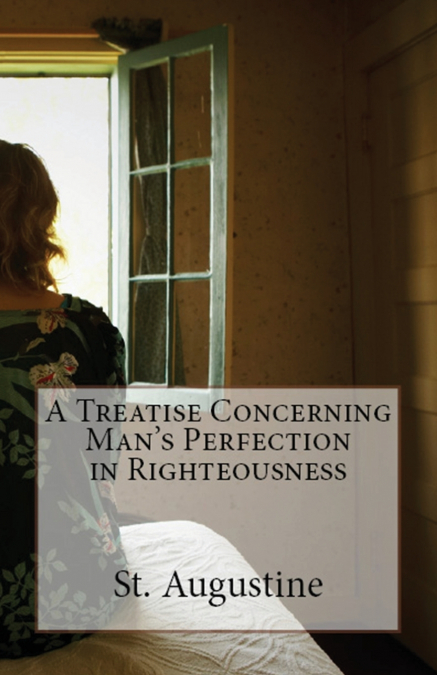
A Treatise Concerning Man’s Perfection in Righteousness

A Treatise Concerning Man’s Perfection in Righteousness

A Treatise Concerning Man's Perfection in Righteousness

St. Augustine / StAugustine / Peter Holmes

6,47 €
IVA incluido
Disponible
Editorial:
lighthouse publishing.
Año de edición:
2018
Materia
Cristianismo
ISBN:
9781643730394
6,47 €
IVA incluido
Disponible

Selecciona una librería:

  • Librería Samer Atenea
  • Librería Aciertas (Toledo)
  • Kálamo Books
  • Librería Perelló (Valencia)
  • Librería Elías (Asturias)
  • Donde los libros
  • Librería Kolima (Madrid)
  • Librería Proteo (Málaga)

Augustin has made no mention of this treatise in his book of Retractations; for the reason, no doubt, that it belonged to the collection of the Epistles, for which he designed a separate statement of Retractations. In all the mss. this work begins with his usual epistolary salutation: “Augustin, to his holy brethren and fellow-bishops Eutropius and Paulus.” And yet, by general consent, this epistle has been received as a treatise, not only in those volumes of his works which contain this work, but also in the writings of those ancient authors who quote it. Amongst these, the most renowned and acquainted with Augustin’s writings, Possidius (In indiculo, 4) and Fulgentius (Ad Monimum, i. 3) expressly call this work “A Treatise on the Perfection of Man’s Righteousness.” So far nearly all the mss. agree, but a few (including the Codd. Audöenensis and Pratellensis) add these words to the general title: “In opposition to those who assert that it is possible for a man to become righteous by his own sole strength.” In a ms. belonging to the Church of Rheims there occurs this inscription: “A Treatise on what are called the definitions of Cœlestius.” Prosper, in his work against the Collator, ch. 43, advises his reader to read, besides some other of Augustin’s “books,” that which he wrote “to the priests Paulus and Eutropius in opposition to the questions of Pelagius and Cœlestius.” From this passage of Prosper, however, in which he mentions, but with no regard to accurate order, some of the short treatises of Augustin against the Pelagians, nobody could rightly show that this work On the Perfection of Man’s Righteousness was later in time than his work On Marriage and Concupiscence, or than the six books against Julianus, which are mentioned previously in the same passage by Prosper. For, indeed, at the conclusion of the present treatise, Augustin hesitates as yet to censure those persons who affirmed that men are living or have lived in this life righteously without any sin at all: their opinion Augustin, in the passage referred to (just as in his treatises On Nature and Grace, n. 3, and On the Spirit and the Letter, nn. 49, 70), does not yet think it necessary stoutly to resist. Nothing had as yet, therefore, been determined on this point; nor were there yet enacted, in opposition to this opinion, the three well-known canons (6–8) of the Council of Carthage, which was held in the year 418. Afterwards, however, on the authority of these canons, he cautions people against the opinion as a pernicious error, as one may see from many passages in his books Against the two Epistles of the Pelagians, especially Book iv. ch. x. (27), where he says: “Let us now consider that third point of theirs, which each individual member of Christ as well as His entire body regards with horror, where they contend that there are in this life, or have been, righteous persons without any sin whatever.” Certainly, in the year 414, in an epistle (157) to Hilary, when answering the questions which were then being agitated in Sicily, he expresses himself in the same tone, and almost in the same language, on sinlessness, as that which he employs at the end of this present treatise. “But those persons,” says he (in ch. ii. n. 4 of that epistle), “however much one may tolerate them when they affirm that there either are, or have been, men besides the one Saint of saints who have been wholly free from sin; yet when they allege that man’s own free will is sufficient for fulfilling the Lord’s commandments, even when unassisted by God’s grace and the gift of the Holy Spirit for the performance of good works, the idea is altogether worthy of anathema and of perfect detestation.”
Artículos relacionados

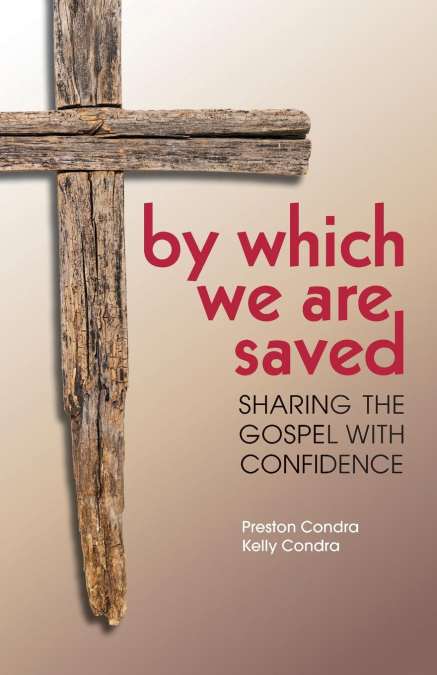
  • By Which We Are Saved
    Kelly Condra / Preston Condra
    Responding to the call to share the Gospel of Christ is an intimidating prospect in our "politically correct" society.  In addition to concerns about causing offense, some Christians feel unprepared to answer questions and objections which may arise.  "By Which We Are Saved" is an evangelism handbook to equip the body of Christ to share their faith with greater confidence.  A d...
    Disponible

    16,07 €

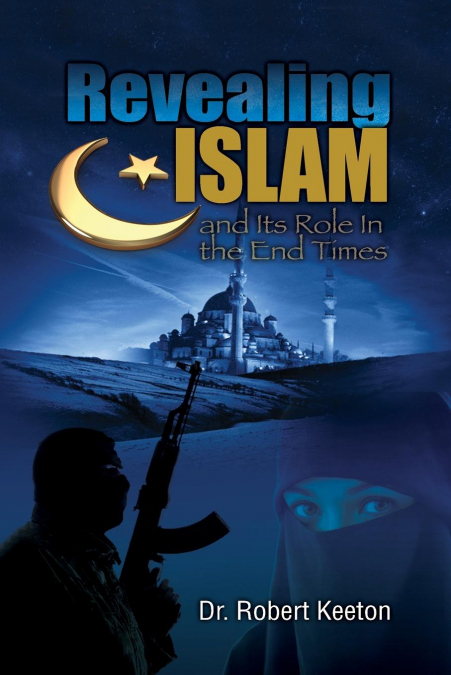
  • Revealing Islam and Its Role In The End Times
    Robert B Keeton
    An informative look at the beliefs and practices of Muslims that will help to equip the reader with knowledge to reach those that are following the religion of Islam.Dr. Keeton has researched and put into practice his findings with positive results. He has taught missionaries and also held church seminars on the religion of Islam since May of 1996.Most books about Islam do not ...
    Disponible

    15,91 €

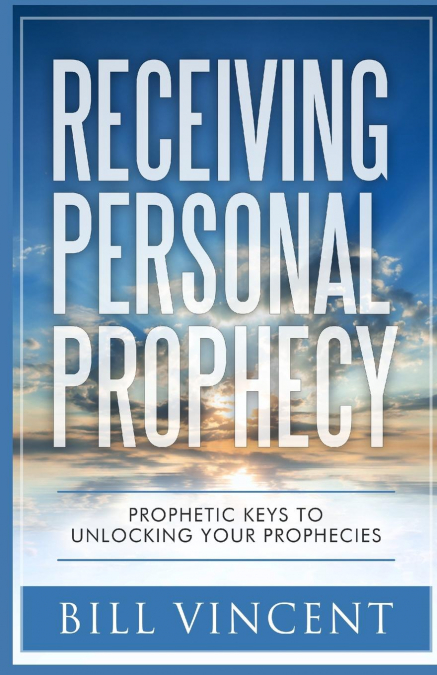
  • Receiving Personal Prophecy
    Bill Vincent
    There have been a lot of lessons he has learned from years of ministry and surrounding himself with prophetic people. Bill has been asked many questions o how to see that personal prophecy come to pass. Bill Vincent is releasing this book, Receiving Personal Prophecy, to answer those questions. This book is Volume Two of Bill's prophetic book series. You can get Volume One,...
    Disponible

    15,58 €

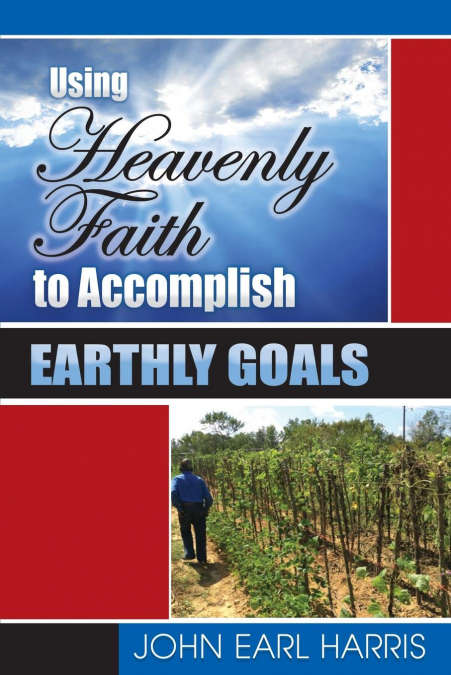
  • Using Heavenly Faith to Accomplish Earthly Goals
    John Earl Harris
    This book tells the story of an uneducated man’s journey from shame and regret to honor and respect. “Using Heavenly Faith to Accomplish Earthly Goals” highlights the importance of getting an education and obeying God’s words. The book reveals the author’s abilities to interpret heavenly visions to provide for daily necessities. The author tells his misfortunes in hope of that ...
    Disponible

    12,07 €

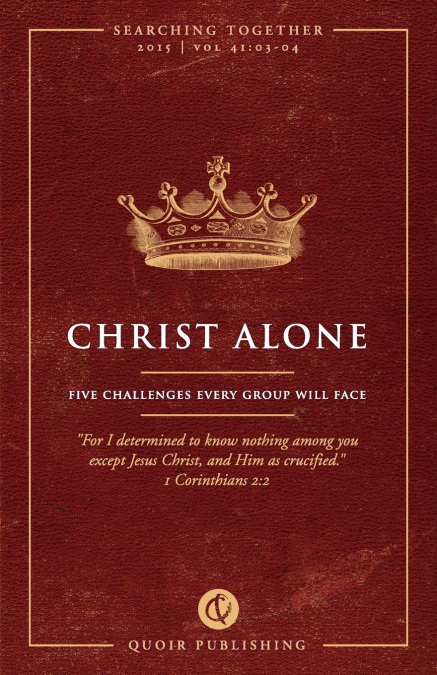
  • Christ Alone
    Jon Zens
    Just as physical families have to face difficulties, so every group of believers will face challenges in their life together. In Christ Alone, Jon Zens opens up five crucial areas that every group will wrestle with at some point in their journey. The first challenge—for Christ to be everything—is the first priority and the other four challenges flow out of it. How do we show th...
    Disponible

    5,77 €

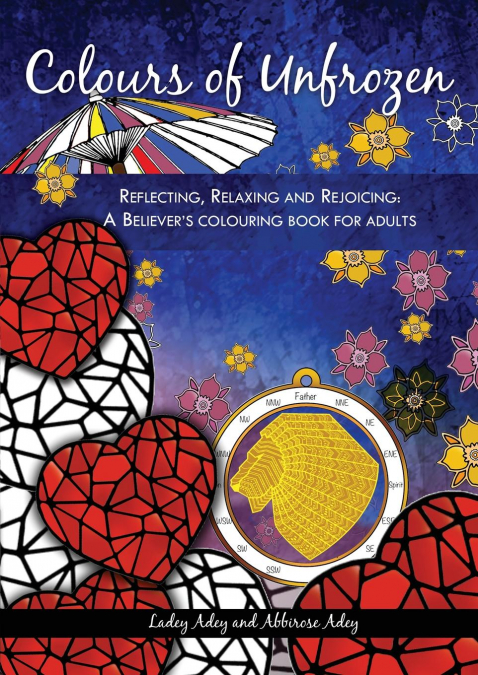
  • Colours of Unfrozen
    Abbirose Adey / Ladey Adey
    This is the first adult colouring book which integrates inspirational devotionals for the reader. It is the second book of the Unfrozen series, Ladey and Abbirose Adey connect pictures, quotes, scripture and devotionals ready for reflections, relaxing and rejoicing by colourists of all ages. It aids the reader to de-stress and reflect on God’s word while colouring, and making e...
    Disponible

    20,64 €

Otros libros del autor

  • A Treatise on Rebuke and Grace
    St. Augustine / StAugustine / Peter Holmes
    I Wrote again to the same persons another treatise, which I entitled On Rebuke and Grace, because I had been told that someone there had said that no man ought to be rebuked for not doing God’s commandments, but that prayer only should be made on his behalf, that he may do them. This book begins on this wise, “I have read your letters, dearly beloved brother Valentine.” ...
    Disponible

    7,40 €

  • A Treatise on the Grace of Christ and on Original Sin
    St. Augustine / StAugustine / Peter Holmes
    “After the conviction and condemnation of the Pelagian heresy with its authors by the bishops of the Church of Rome, —first Innocent, and then Zosimus, —with the cooperation of letters of African councils, I wrote two books against them: one On the Grace of Christ, and the other On Original Sin. The work began with the following words: ‘How greatly we rejoice because your bodil...
    Disponible

    9,57 €

  • On Marriage and Concupiscence
    St. Augustine / StAugustine / Peter Holmes
    “I Addressed two books to the Illustrious Count Valerius, upon hearing that the Pelagians had brought sundry vague charges upon us—how, for instance, we condemned marriage by maintaining Original Sin. These books are entitled, On Marriage and Concupiscence. We maintain that marriage is good; and that it must not be supposed that the concupiscence of the flesh, or “the law in ou...
    Disponible

    9,45 €

  • A Treatise on the Soul and its Origin
    St. Augustine / StAugustine / Peter Holmes
    “At that time one Vincentius discovered in the possession of a certain presbyter called Peter, in Mauritania Cæsariensis, a little work of mine, in a particular passage of which, touching the origin of souls in individual men, I had confessed that I knew not whether they are propagated from the primeval soul of the first man, and from that by parental descent, or whether they a...
    Disponible

    10,97 €