Inicio > Humanidades > Filosofía > Ética y filosofía moral > A Subtle and Mysterious Machine
A Subtle and Mysterious Machine

A Subtle and Mysterious Machine

Emily Booth

244,50 €
IVA incluido
Disponible
Editorial:
Springer Nature B.V.
Año de edición:
2010
Materia
Ética y filosofía moral
ISBN:
9789048168484
244,50 €
IVA incluido
Disponible

Selecciona una librería:

  • Librería Samer Atenea
  • Librería Aciertas (Toledo)
  • Kálamo Books
  • Librería Perelló (Valencia)
  • Librería Elías (Asturias)
  • Donde los libros
  • Librería Kolima (Madrid)
  • Librería Proteo (Málaga)

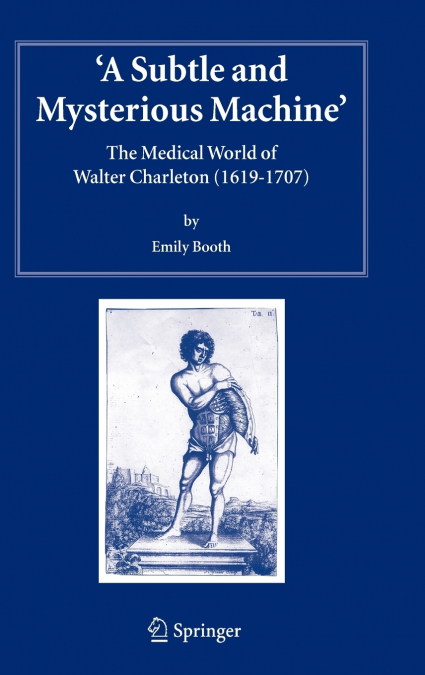
Walter Charleton is an intriguing character-he flits through the diaries of Pepys and Evelyn, the correspondence of Margaret Cavendish, and his texts appear in the libraries of better-known contemporaries. We catch sight of him 1 conversing with Pepys about teeth, arguing with Inigo Jones about the origin of 2 Stonehenge, being lampooned in contemporary satire, stealing from the Royal Society, and embarrassing himself in anatomical procedures. While extremely active in a broad range of Royal Society investigations, his main discovery there seems to have been that tadpoles turned into frogs. As a practising physician of limited means, Walter Charleton was reliant for his living upon patrons and his medical practice-in addition he had the m- fortune to live in an era of dramatic political change, and consequently of unpredictable fortune. His achievements were known on the Continent. Despite his embarrassments in Royal Society anatomical investigation he was offered the prestigious chair of anatomy at the University of Padua. He turned down this extraordinary opportunity, only to die destitute in his native country a couple of decades later. The lugubrious doctor is without doubt an enigma. Charleton’s Anglicanism and staunch Royalism were unwavering throughout his career. The latter caused difficulties for him when he attempted to gain membership of the College of Physicians during the interregnum. His religious views were a source of concern when he was offered the position at Padua.

Artículos relacionados

  • Ka Ab Ba Building The Lighted Temple
    Dr Terri R. Nelson / Dr Terri RNelson
    The book KaAbBa Building The Lighted Temple/Metaphysical Keys to the Tree of Life draws a circle that is inclusive of the Afrikan origin of the Ancient Kemetic/Egyptian wisdom. It reveals the undeniable root and link of Ancient Africa to all the religious systems that would develop worldwide. This book is explosive in its power to convey the meaning of KaAbBa, the Medu Neter  (...
    Disponible

    37,41 €

  • Technoethics and the Evolving Knowledge Society
    Rocci Luppicini
    Recently, there has been a major push to rediscover the ethical dimension of technology across the sciences, social sciences, and humanities. Technoethics and the Evolving Knowledge Society: Ethical Issues in Technological Design, Research, Development, and Innovation examines human processes and practices connected to technology embedded within social, political, and moral sph...
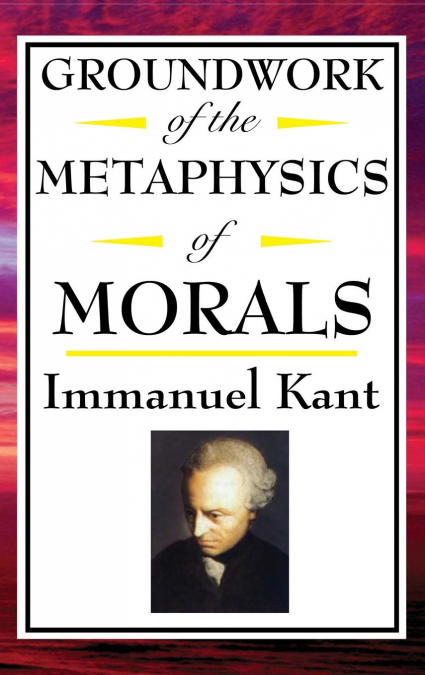
  • Kant
    Immanuel Kant
    Kant’s Groundwork of the Metaphysics of Morals is one of the most important works in modern moral philosophy. It belongs beside Plato, Aristotle, Machiavelli, and Hobbes. Here Kant sets out to articulate and defend the Categorical Imperative - the fundamental principle that underlies moral reasoning - and to lay the foundation for a comprehensive account of justice and human vi...
  • On the Duty of Civil Disobedience
    HENRY DAVID THOREAU
    Civil Disobedience argues that citizens should not permit their governments to overrule their consciences, and that they have a duty to avoid allowing their acquiescence to enable the government to make them the agents of injustice. Thoreau was motivated in part by his disgust with slavery and the Mexican-American War, but the sentiments he expresses here are just as pertinent ...
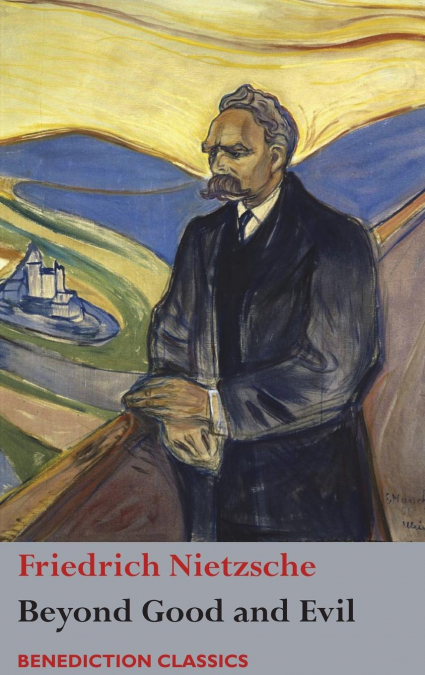
  • Beyond Good and Evil
    Friedrich Nietzsche
    Nietzsche, though primarily a philosopher, wrote widely on art, philology, history, religion, tragedy, culture, and science.  In 1886, at the height of his powers, he published Beyond Good and Evil.  Here he examines much of the best of human thought--dogmatic philosophy, Judeo-Christian morality, science and democracy – and finds it lacking.  Rejecting “slave-morality” he pres...
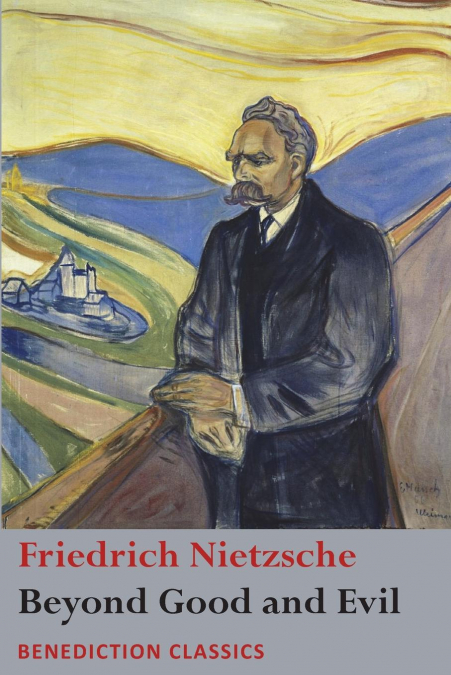
  • Beyond Good and Evil
    Friedrich Nietzsche
    Nietzsche, though primarily a philosopher, wrote widely on art, philology, history, religion, tragedy, culture, and science.  In 1886, at the height of his powers, he published Beyond Good and Evil.  Here he examines much of the best of human thought--dogmatic philosophy, Judeo-Christian morality, science and democracy – and finds it lacking.  Rejecting “slave-morality” he pres...
    Disponible

    9,99 €

Otros libros del autor

  • A Subtle and Mysterious Machine
    Emily Booth
    Walter Charleton is an intriguing character-he flits through the diaries of Pepys and Evelyn, the correspondence of Margaret Cavendish, and his texts appear in the libraries of better-known contemporaries. We catch sight of him 1 conversing with Pepys about teeth, arguing with Inigo Jones about the origin of 2 Stonehenge, being lampooned in contempora...