
Inicio > Humanidades > Arqueología > A Study of Palaeolithic Artefacts from Selected Sites on Deposits Mapped as Clay-with-Flints of Southern England
A Study of Palaeolithic Artefacts from Selected Sites on Deposits Mapped as Clay-with-Flints of Southern England

A Study of Palaeolithic Artefacts from Selected Sites on Deposits Mapped as Clay-with-Flints of Southern England

A Study of Palaeolithic Artefacts from Selected Sites on Deposits Mapped as Clay-with-Flints of Southern England

Vicky Winton

93,90 €
IVA incluido
Disponible
Editorial:
British Archaeological Reports (Oxford) Ltd
Año de edición:
2004
Materia
Arqueología
ISBN:
9781841715810
Páginas:
272
Encuadernación:
Rústica
93,90 €
IVA incluido
Disponible

Selecciona una librería:

  • Librería Samer Atenea
  • Librería Aciertas (Toledo)
  • Kálamo Books
  • Librería Perelló (Valencia)
  • Librería Elías (Asturias)
  • Donde los libros
  • Librería Kolima (Madrid)
  • Librería Proteo (Málaga)

Recent research suggests that the earliest human occupation of the British Isles stretches back to before 500,000 years ago, whilst anatomically modern humans do not appear to have arrived in Europe before approximately 50-40,000 years ago. During the intervening period, of perhaps half a million years, referred to as the Lower and Middle Palaeolithic, archaic species of human were at least sporadically present in southern England. Few actual hominid fossils have survived, but there are plenty of other enduring traces of human presence.This book presents the results of an investigation of stone artefacts from southern England, which date to the Lower and Middle Palaeolithic, with particular reference to assemblages from 2 sites at high levels in the landscape. This book aims to show that aspects of cultural adaptation in European archaic humans can be investigated using the evidence of Lower and Middle Palaeolithic stone artefacts.In addition, the book is devoted to the specific question of how best to understand Palaeolithic artefacts preserved within deposits mapped as Clay-with-flints. The contents of the volume includes a review of approaches to the study of stone artefacts produced as a result of handaxe-making, and then presents a study of an experimentally produced handaxe and associated waste products from its manufacture. This, in turn, forms the basis for the methodology of artefact recording which was applied to the Wood Hill Palaeolithic assemblage from Kent. Analyses of the Wood Hill assemblage are presented in Chapter Three and Chapter Four. In Chapter Five, the themes of handaxe functional efficiency and knapping skill development, which developed from the study of the Wood Hill assemblage, are investigated with interesting results regarding handaxe morphological variability. Chapter Six presents the results of investigations (including field-survey) at the site of Dickett's Field in Hampshire. In Chapter Seven, observations and experiments to investigate the ways in which flint artefacts weather are discussed, The discussion and conclusions chapter (Chapter Eight) comprises a final synthesis of the evidence presented. This work represents the first dedicated modern study of Palaeolithic assemblages from sites on deposits mapped as Clay-with-flints and provides plenty of food for thought. Excitingly, many of the themes touched upon now require further investigation and development. In the accompanying downloadable video, the author provides the commentary for a demonstration of butchery techniques using flint tools, showing the effectiveness of various shapes and sizes of cutting implements.
Artículos relacionados

  • PHAROS
    Branko Kirigin
    This is the first detailed study in English of the Greek settlement of Pharos (Stari Grad) on the Croatian island of Hvar. This book presents life in Stari Grad (a Parian colony of the 4th c BC) and its nearby vicinity in the period occurring more than two millennia ago. The author employs methods used in prehistoric and classical archaeology, as well as data known from written...
    Disponible

    90,79 €

  • Paleolithic Zooarchaeology in Practice
    Understanding Paleolithic animal exploitation requires a multifaceted approach. Inferences may derive from research on paleoenvironments and taphonomy, the development of new methods for interpreting seasonality patterns, and ethnoarchaeological observations. A full understanding of Paleolithic economies also requires a multiregional perspective. This volume brings together a g...
    Disponible

    55,20 €

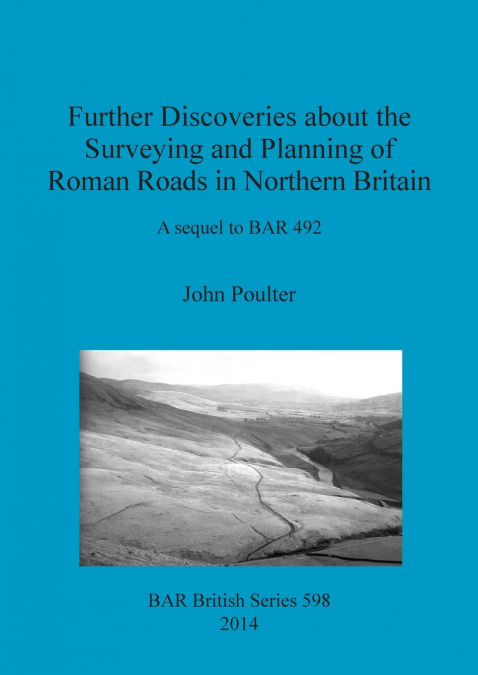
  • Further Discoveries about the Surveying and Planning of Roman Roads in Northern Britain
    John Poulter
    The research reported in this monograph follows on directly from the findings that were reported in BAR 492, in which, among many other discoveries, the author recognised that the courses of both Roman Dere Street and Hadrian’s Wall had been underpinned by frameworks of long-distance alignments. Stimulated by the detection of several more of these alignments across northern Eng...
    Disponible

    65,21 €

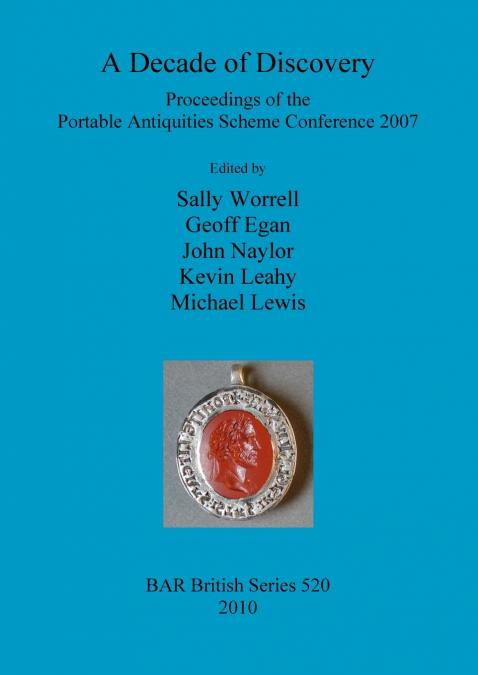
  • A Decade of Discovery
    Edited by Sally Worrell, Geoff Egan, John Naylor, Kevin Leahy and Michael Lewis.In 2007 the Portable Antiquities Scheme (PAS) marked its tenth anniversary by holding a conference at which speakers, both from within the Scheme and outside gave a series of papers that demonstrated the research potential of recording finds of archaeological objects made by members of the public. T...
    Disponible

    117,84 €

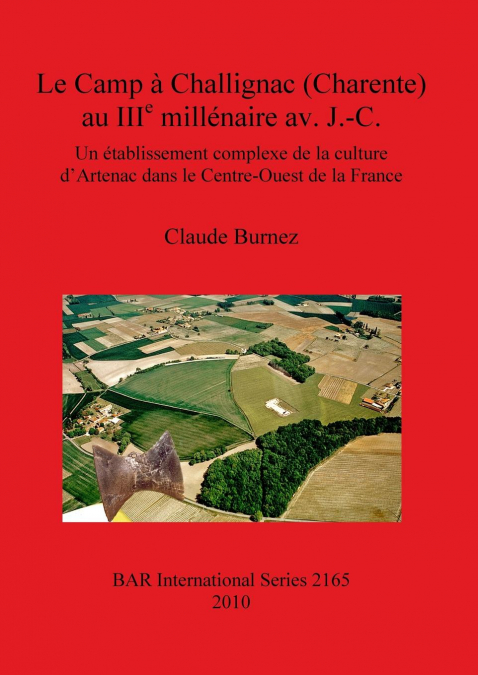
  • Le Camp à Challignac (Charente) au IIIe millénaire av. J.-C.
    Claude Burnez
    Un établissement complexe de la culture d’Artenac dans le Centre-Ouest de la FranceThis fortified enclosure has been known since the middle of the 19th century, but the size and the state of preservation (with the height of the rampart estimated optimistically at 10 metres!) suggested an attribution to the Gallo-Romans or a 'Camp des Anglais'. Extensive woodland covered...
    Disponible

    238,69 €

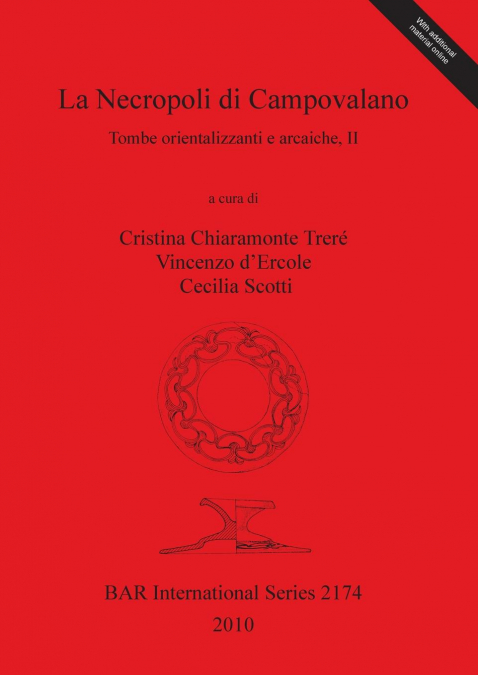
  • La Necropoli di Campovalano
    This volume, investigating the necropolis and sequences of 607 tombs, completes the publication of the site of Campovalano (predominately Late BA to 5th BC) in the region of Teramo, the northernmost province of Abruzzo, Italy (see BAR 1177, 2003). The finds include important oriental style archaic material.Contributions from: Giorgio Baratti, Carla Buoite, Cristina Chiaramonte ...
    Disponible

    220,16 €