Inicio > Humanidades > Filosofía > A Selection from the Discourses of Epictetus with the Encheiridion
A Selection from the Discourses of Epictetus with the Encheiridion

A Selection from the Discourses of Epictetus with the Encheiridion

Epictetus

19,82 €
IVA incluido
Disponible
Editorial:
Bibliotech Press
Año de edición:
2020
Materia
Filosofía
ISBN:
9781647993368
19,82 €
IVA incluido
Disponible

Selecciona una librería:

  • Librería Samer Atenea

  • Kálamo Books
  • Librería Elías (Asturias)
  • Librería Kolima (Madrid)
  • Librería Proteo (Málaga)

Epictetus (55 – 135 AD) was a Greek Stoic philosopher. He was born a slave at Hierapolis, Phrygia (present day Pamukkale, Turkey) and lived in Rome until his banishment, when he went to Nicopolis in northwestern Greece for the rest of his life. His teachings were written down and published by his pupil Arrian in his Discourses and Enchiridion.Epictetus taught that philosophy is a way of life and not just a theoretical discipline. To Epictetus, all external events are beyond our control; we should accept calmly and dispassionately whatever happens. However, individuals are responsible for their own actions, which they can examine and control through rigorous self-discipline. Epictetus was born c. 55 A.D., presumably at Hierapolis, Phrygia. The name his parents gave him is unknown; the word epiktetos in Greek simply means "gained" or "acquired"; the Greek philosopher Plato, in his Laws, uses the term as property that is "added to one's hereditary property". He spent his youth as a slave in Rome to Epaphroditos, a wealthy freedman and secretary to Nero.Early in life, Epictetus acquired a passion for philosophy and, with the permission of his wealthy owner, he studied Stoic philosophy under Musonius Rufus, which allowed him to rise in respectability as he grew more educated. Somehow, he became crippled. Origen stated that his leg was deliberately broken by his master. Simplicius stated that he had been lame from childhood. Epictetus obtained his freedom sometime after the death of Nero in 68 A.D., and he began to teach philosophy in Rome. About 93 A.D. Emperor Domitian banished all philosophers from the city, and Epictetus went to Nicopolis in Epirus, Greece, where he founded a philosophical school.He lived a life of great simplicity, with few possessions. He lived alone for a long time, but in his old age he adopted a friend's child who otherwise would have been left to die, and raised him with the aid of a woman. It is unclear whether Epictetus and she were married. He died sometime around 135 A.D. After his death, according to Lucian, his oil lamp was purchased by an admirer for 3,000 drachmae. (wikipedia.org) 
Artículos relacionados

  • Introduction to a Future Way of Thought
    Kostas Axelos / Kenneth Mills
    'Technologists only change the world in various ways in generalized indifference; the point is to think the world and interpret the changes in its unfathomability, to perceive and experience the difference binding being to the nothing.'Anticipating the age of planetary technology Kostas Axelos, a Greek-French philosopher, approaches the technological question in this book, firs...
    Disponible

    20,64 €

  • Capsule
    John Kenneth Press
    Join John and Adam as they wander the mean streets of Japan on a psychedelic fueled search for identity. While fun for the average reader, this book could also serve as a philosphy textbook because of its ordered exploration of sources of identity. Ultimately this trip through nationalist attacks, sex, and drugs, will take you to a better understanding of yourself and your pl...
    Disponible

    13,44 €

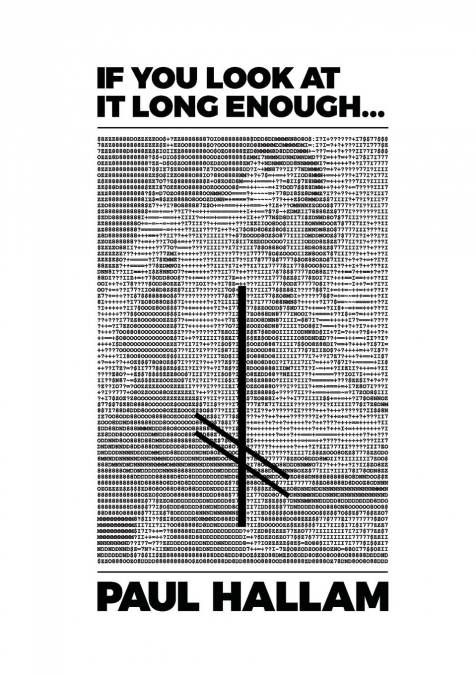
  • If you look at it long enough...
    Paul Hallam
    Originally written for an academic journal, If you look at it long enough... is primarily a personal account of Paul Hallam’s recollections of “self-abuse” through the consumption of porn over several decades. Challenging the familiar form of an “academic essay,” this autobiographical narrative raises several questions in relation to our contemporary morals related to sex in ge...
    Disponible

    13,72 €

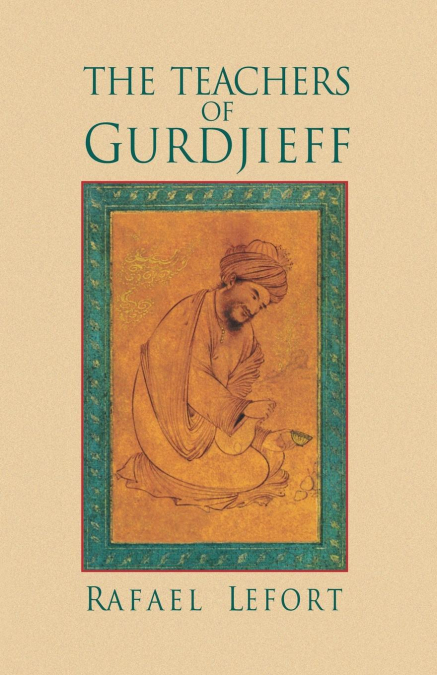
  • The Teachers of Gurdjieff
    Rafael Lafort / Rafael Lefort
    When The Teachers of Gurdjieff was first published more than 50 years ago, it made a considerable stir. George Ivanovich Gurdjieff had been one of the most famous mystics in the West in the first half of the 20th century - a teaching master who had many fashionable and influential pupils. He had a striking appearance and manner of teaching, and his teaching proved to be very in...
    Disponible

    22,79 €

  • Manifesto of the Communist Party
    Karl Marx
    The Communist Manifesto was first published on February 21, and it is one of the world’s most influential political tracts. Commissioned by the Communist League and written by communist theorists Karl Marx and Friedrich Engels, it laid out the League’s purposes and program. The Manifesto suggested a course of action for a proletarian (working class) revolution to overthrow the ...
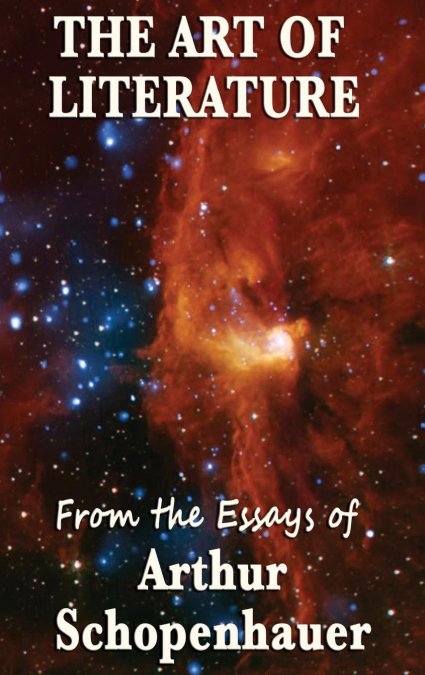
  • The Art of Literature
    Arthur Schopenhauer
    Collected here are eight short essays, On Authorship, On Style, On the Study of Latin, On Men of Learning, On Thinking for Ones Self, On Criticism, On Reputation, On Genius, by the world renowned philosopher Arthur Achopenhauer. ...

Otros libros del autor

  • The Golden Sayings of Epictetus, with the Hymn of Cleanthes
    Epictetus
    You cannot command every circumstance. You can learn to govern how you meet it.The Golden Sayings of Epictetus, with the Hymn of Cleanthes brings together concise teachings from one of antiquity’s enduring Stoic voices. Born into slavery and later a teacher of philosophy, Epictetus placed moral character above possessions, reputation, and power. His central distinction—between ...
  • The Golden Sayings of Epictetus, with the Hymn of Cleanthes: Large Print
    Epictetus
    You cannot command every circumstance. You can learn to govern how you meet it.The Golden Sayings of Epictetus, with the Hymn of Cleanthes brings together concise teachings from one of antiquity’s enduring Stoic voices. Born into slavery and later a teacher of philosophy, Epictetus placed moral character above possessions, reputation, and power. His central distinction—between ...
  • The Teaching of Epictetus
    Epictetus
    You cannot command everything that happens to you. You can learn to govern how you respond.The Teaching of Epictetus brings together the practical wisdom of a central voice in ancient Stoicism. Drawing on the Discourses and Enchiridion, which preserve his teachings through his student Arrian, the work asks a demanding question: what belongs within our power, and what does not? ...
  • The Teaching of Epictetus: Large Print
    Epictetus
    You cannot command everything that happens to you. You can learn to govern how you respond.The Teaching of Epictetus brings together the practical wisdom of a central voice in ancient Stoicism. Drawing on the Discourses and Enchiridion, which preserve his teachings through his student Arrian, the work asks a demanding question: what belongs within our power, and what does not? ...
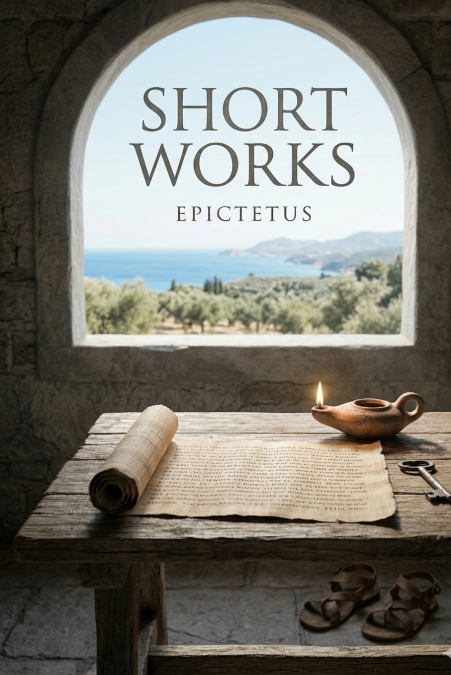
  • Short Works
    Epictetus
    Short Worksby EpictetusBorn enslaved and lamed by his master, Epictetus studied Stoic philosophy while in bondage. Once freed, he survived Domitian’s banishment of all philosophers from Rome to settle in Greece, where he founded a school of philosophy. He quickly rose to prominence as a renowned Stoic scholar and teacher, and even though he was personally favored by emperors, h...
    Disponible

    25,01 €

  • Discourses
    Epictetus
    'Discourses' by Epictetus is a cornerstone of Stoic philosophy, preserving the profound oral teachings of the renowned philosopher as recorded by his student Arrian. This volume, containing Books I and II, presents a practical and accessible framework for living a life of integrity, resilience, and inner peace. Epictetus focuses on the essential Stoic principle that our happine...
    Disponible

    31,62 €