

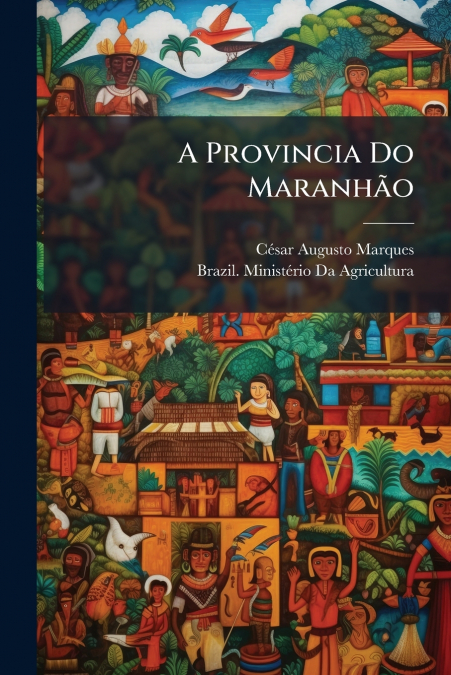
César Augusto Marques / Brazil. Ministério Da Agricultura
 Librería Samer Atenea
 Kálamo Books
 Librería Elías (Asturias)
 Librería Kolima (Madrid)
 Librería Proteo (Málaga)
A Provincia Do Maranhão, subtitled Breve Memoria Publicada Por Ordem Do Ministerio Da Agricultura, Commercio E Obras Publicas, offers a historical snapshot of the Brazilian province of Maranhão. Originally published in 1876 under the auspices of the Ministry of Agriculture, Commerce, and Public Works, this volume provides insights into the region’s socio-economic landscape during the latter half of the 19th century.Authored by César Augusto Marques, in collaboration with the Brazilian Ministry of Agriculture, the book likely explores various facets of Maranhão, potentially covering aspects such as agricultural practices, commercial activities, and public works initiatives undertaken in the region. This historical document serves as a valuable resource for understanding the development and administration of Maranhão within the broader context of Brazilian history and its economic dependencies.This work has been selected by scholars as being culturally important, and is part of the knowledge base of civilization as we know it. This work was reproduced from the original artifact, and remains as true to the original work as possible. Therefore, you will see the original copyright references, library stamps (as most of these works have been housed in our most important libraries around the world), and other notations in the work.This work is in the public domain in the United States of America, and possibly other nations. Within the United States, you may freely copy and distribute this work, as no entity (individual or corporate) has a copyright on the body of the work.As a reproduction of a historical artifact, this work may contain missing or blurred pages, poor pictures, errant marks, etc. Scholars believe, and we concur, that this work is important enough to be preserved, reproduced, and made generally available to the public. We appreciate your support of the preservation process, and thank you for being an important part of keeping this knowledge alive and relevant.





