A New Stoicism

A New Stoicism

Lawrence C. Becker

33,42 €
IVA incluido
Disponible
Editorial:
Princeton University Press
Año de edición:
2017
Materia
Ética y filosofía moral
ISBN:
9780691177212
33,42 €
IVA incluido
Disponible

Selecciona una librería:

  • Librería Samer Atenea
  • Librería Aciertas (Toledo)
  • Kálamo Books
  • Librería Perelló (Valencia)
  • Librería Elías (Asturias)
  • Donde los libros
  • Librería Kolima (Madrid)
  • Librería Proteo (Málaga)

What would stoic ethics be like today if stoicism had survived as a systematic approach to ethical theory, if it had coped successfully with the challenges of modern philosophy and experimental science? A New Stoicism proposes an answer to that question, offered from within the stoic tradition but without the metaphysical and psychological assumptions that modern philosophy and science have abandoned. Lawrence Becker argues that a secular version of the stoic ethical project, based on contemporary cosmology and developmental psychology, provides the basis for a sophisticated form of ethical naturalism, in which virtually all the hard doctrines of the ancient Stoics can be clearly restated and defended.Becker argues, in keeping with the ancients, that virtue is one thing, not many; that it, and not happiness, is the proper end of all activity; that it alone is good, all other things being merely rank-ordered relative to each other for the sake of the good; and that virtue is sufficient for happiness. Moreover, he rejects the popular caricature of the stoic as a grave figure, emotionally detached and capable mainly of endurance, resignation, and coping with pain. To the contrary, he holds that while stoic sages are able to endure the extremes of human suffering, they do not have to sacrifice joy to have that ability, and he seeks to turn our attention from the familiar, therapeutic part of stoic moral training to a reconsideration of its theoretical foundations.

Artículos relacionados

  • Ka Ab Ba Building The Lighted Temple
    Dr Terri R. Nelson / Dr Terri RNelson
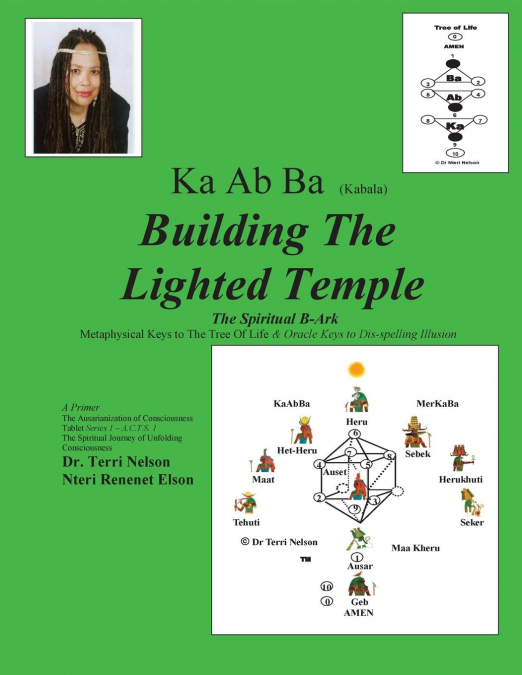
    The book KaAbBa Building The Lighted Temple/Metaphysical Keys to the Tree of Life draws a circle that is inclusive of the Afrikan origin of the Ancient Kemetic/Egyptian wisdom. It reveals the undeniable root and link of Ancient Africa to all the religious systems that would develop worldwide. This book is explosive in its power to convey the meaning of KaAbBa, the Medu Neter  (...
    Disponible

    37,41 €

  • Technoethics and the Evolving Knowledge Society
    Rocci Luppicini
    Recently, there has been a major push to rediscover the ethical dimension of technology across the sciences, social sciences, and humanities. Technoethics and the Evolving Knowledge Society: Ethical Issues in Technological Design, Research, Development, and Innovation examines human processes and practices connected to technology embedded within social, political, and moral sph...
  • Kant
    Immanuel Kant
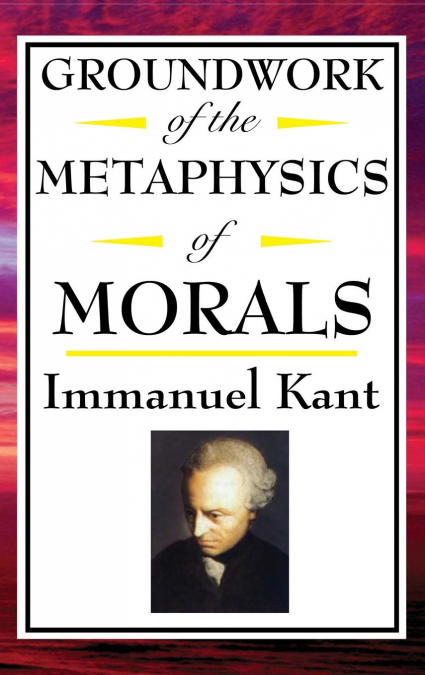
    Kant’s Groundwork of the Metaphysics of Morals is one of the most important works in modern moral philosophy. It belongs beside Plato, Aristotle, Machiavelli, and Hobbes. Here Kant sets out to articulate and defend the Categorical Imperative - the fundamental principle that underlies moral reasoning - and to lay the foundation for a comprehensive account of justice and human vi...
  • On the Duty of Civil Disobedience
    HENRY DAVID THOREAU
    Civil Disobedience argues that citizens should not permit their governments to overrule their consciences, and that they have a duty to avoid allowing their acquiescence to enable the government to make them the agents of injustice. Thoreau was motivated in part by his disgust with slavery and the Mexican-American War, but the sentiments he expresses here are just as pertinent ...
  • Beyond Good and Evil
    Friedrich Nietzsche
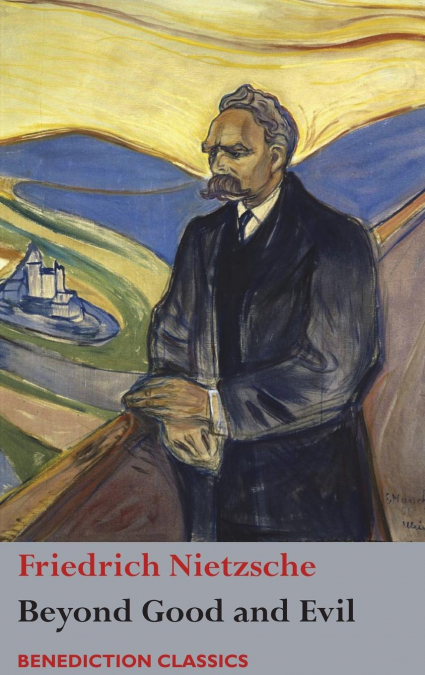
    Nietzsche, though primarily a philosopher, wrote widely on art, philology, history, religion, tragedy, culture, and science.  In 1886, at the height of his powers, he published Beyond Good and Evil.  Here he examines much of the best of human thought--dogmatic philosophy, Judeo-Christian morality, science and democracy – and finds it lacking.  Rejecting “slave-morality” he pres...
  • Beyond Good and Evil
    Friedrich Nietzsche
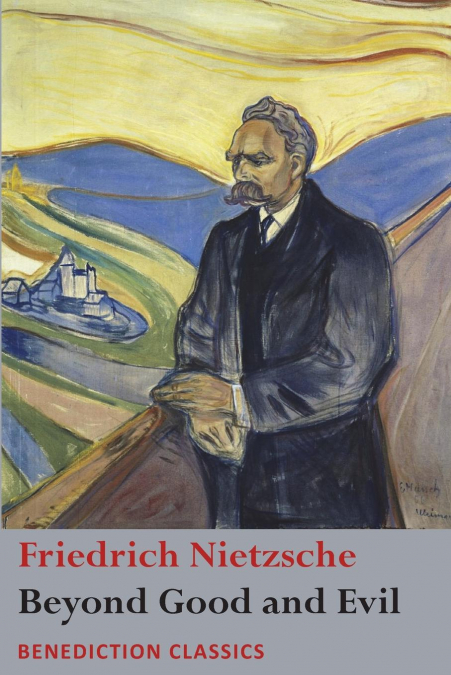
    Nietzsche, though primarily a philosopher, wrote widely on art, philology, history, religion, tragedy, culture, and science.  In 1886, at the height of his powers, he published Beyond Good and Evil.  Here he examines much of the best of human thought--dogmatic philosophy, Judeo-Christian morality, science and democracy – and finds it lacking.  Rejecting “slave-morality” he pres...
    Disponible

    9,99 €

Otros libros del autor

  • On Justifying Moral Judgements (Routledge Revivals)
    Lawrence C. Becker
    The thesis of On Justifying Moral Judgments insists that rigorous justifications are possible for moral judgments. Crucially, Becker argues for the coordination of the three main approaches to moral theory: axiology, deontology, and agent morality. A pluralistic account of the concept of value is expounded, and a solution to the problem of ultimate justification is suggested. A...
    Disponible

    82,87 €

  • Property Rights (Routledge Revivals)
    Lawrence C. Becker
    This title, first published in 1977, comprehensively examines the general justifications for systems of private property rights, and discusses with great clarity the major arguments as to the rights and responsibilities of property ownership. In particular, the arguments that hold that there are natural rights derived from first occupancy, labour, utility, liberty and virtue ar...
    Disponible

    77,79 €