

LL.D Ebunoluwa Elizabeth Abolarin
 Librería Samer Atenea
 Kálamo Books
 Librería Elías (Asturias)
 Librería Kolima (Madrid)
 Librería Proteo (Málaga)
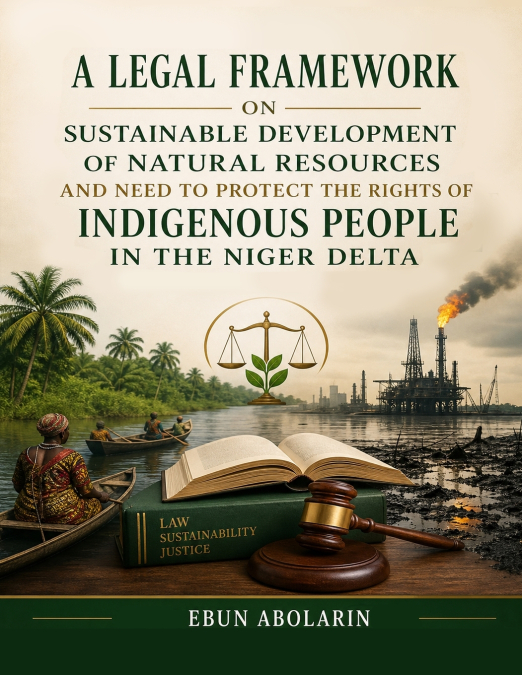
How can a nation sustainably develop its natural resources while protecting the rights, livelihoods, and future of the indigenous communities whose lands hold that wealth?In Nigeria’s Niger Delta, the discovery and exploitation of oil and gas have generated substantial national revenue, yet many of the region’s indigenous communities continue to face environmental degradation, economic hardship, marginalisation, and limited participation in decisions affecting their lands and resources.In this important legal and policy study, Elizabeth Ebun Abolarin examines the relationship between natural-resource governance, indigenous peoples’ rights, environmental protection, and sustainable development. Drawing on international human rights law, African regional legal frameworks, Nigerian legislation, and established development theories, the book explores the legal challenges surrounding resource extraction and its consequences for the indigenous peoples of the Niger Delta.The study examines the rights of indigenous communities to self-determination, traditional lands, natural resources, meaningful participation, and equitable development. Particular attention is given to the experiences of the Ijaw and Ogoni peoples, the legal implications of the Niger Delta conflict, and the tension between state sovereignty over natural resources and the interests of the communities traditionally connected to them.A central feature of the book is its proposed legal framework for sustainable natural-resource development. It considers the importance of legally recognising indigenous peoples, integrating human capabilities into development policies, ensuring meaningful community participation, and strengthening the state’s responsibility to protect human rights and the environment.The book also examines the relevance of international instruments, including the United Nations Declaration on the Rights of Indigenous Peoples (UNDRIP) and the International Labour Organization’s Indigenous and Tribal Peoples Convention, 1989 (ILO Convention No. 169), alongside the African Charter on Human and Peoples’ Rights and Nigeria’s domestic legal framework.By connecting legal scholarship with the practical challenges of resource-rich communities, this work contributes to discussions on environmental justice, indigenous peoples’ rights, constitutional reform, and sustainable development in Nigeria and beyond.An important academic resource for readers interested in:Indigenous peoples’ rights and international human rights lawEnvironmental law and sustainable natural-resource managementOil and gas governance in NigeriaThe Niger Delta conflict and its legal dimensionsSelf-determination, land rights, and resource sovereigntySustainable development and community participationAfrican legal systems and constitutional reformPublisher: BookFuel





