 Librería Samer Atenea
 Kálamo Books
 Librería Elías (Asturias)
 Librería Kolima (Madrid)
 Librería Proteo (Málaga)
1. El mandato de mi voz interior, o cómo tomé la decisión de escribir estas memorias vacunas.
2. Por qué no regreso a Balanzategui, mi casa natal.
3. Gafas verdes y sus dos subordinados.
4. Mi dulce vida en Balazantegui y sus malas consecuencias.
5. Abandono la compañía de las vacas tontas, y eso me lleva al desierto.
6. Una larga conservación entre "La Vache" y yo.
7. Cambia la situación de Balanzategui.
8. "La Vache" y yo comenzamos a vivir en pleno monte, y vemos a los jabalíes.
9. Aquí se acaban estas memorias, al menos de momento.
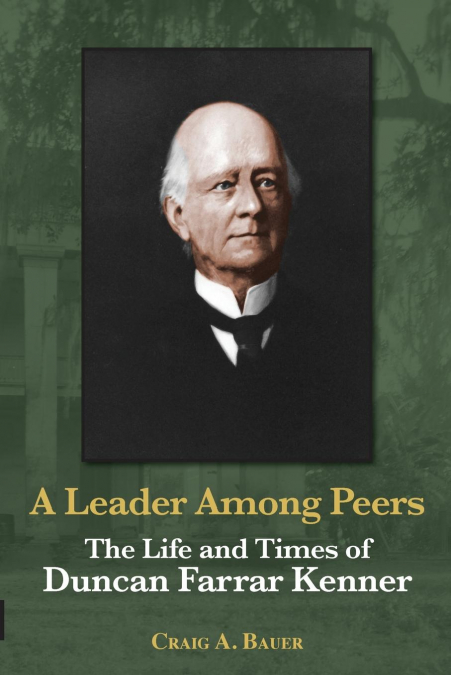
The history of Louisiana is replete with many prominent personalities who were instrumental in guiding the social and political direction of the state through the portentous decades of the nineteenth century. This book undertakes an examination of a major contributor to events in Louisiana and in the South during the last century who has been largely overlooked by historians. Though some attention has been given to Duncan Farrar Kenner’s Civil War exploit of undertaking a hazardous diplomatic mission to Europe during the war’s final days in a last desperate attempt by the South to stave off defeat, this work is the first in-depth examination of his life and contributions. There were individuals in Louisiana who rose for periods of time to greater levels of political and social influence; however, no other individual in nineteenth-century Louisiana sustained as high a position of influence for a longer period of time than Duncan Kenner. On first view his life appears to personify much of the glamorized “moonlight and magnolias” culture that has characterized so much of literature on the nineteenth-century South. However, this examination of Kenner reveals a far more capitalistic and multi-dimensional existence than the seigniorial lifestyle associated with the Southern planter. The author offers the reader not only a fresh look at an important Louisianian of the past but also places Kenner within the perspective of his times.