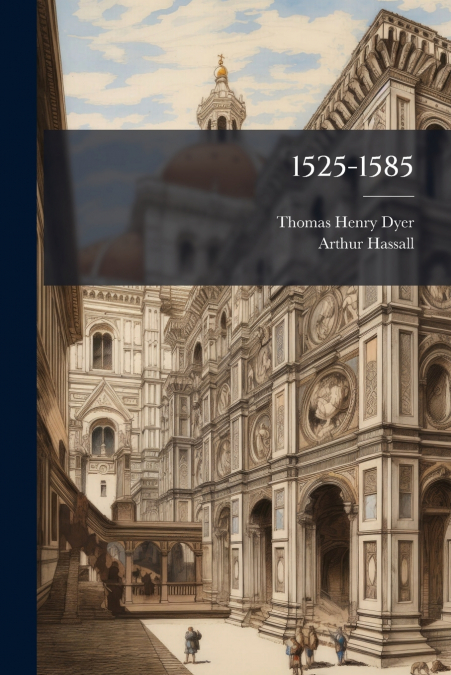
Arthur Hassall / Thomas Henry Dyer
 Librería Samer Atenea
 Kálamo Books
 Librería Elías (Asturias)
 Librería Kolima (Madrid)
 Librería Proteo (Málaga)
'A History of Modern Europe from 1679-1789' offers a detailed exploration of a pivotal century in European history. Authored by Thomas Henry Dyer and Arthur Hassall, this comprehensive volume delves into the political, social, and cultural transformations that shaped the continent. From the reign of Louis XIV to the eve of the French Revolution, the book examines key events, figures, and movements that defined the era. Readers will gain insights into the rise of absolutism, the Enlightenment, and the shifting balance of power among European nations. The authors provide a thorough analysis of wars, diplomacy, intellectual currents, and economic developments, offering a nuanced understanding of this complex and transformative period. This historical account serves as an invaluable resource for students and enthusiasts seeking a deeper knowledge of early modern Europe.This work has been selected by scholars as being culturally important, and is part of the knowledge base of civilization as we know it. This work was reproduced from the original artifact, and remains as true to the original work as possible. Therefore, you will see the original copyright references, library stamps (as most of these works have been housed in our most important libraries around the world), and other notations in the work.This work is in the public domain in the United States of America, and possibly other nations. Within the United States, you may freely copy and distribute this work, as no entity (individual or corporate) has a copyright on the body of the work.As a reproduction of a historical artifact, this work may contain missing or blurred pages, poor pictures, errant marks, etc. Scholars believe, and we concur, that this work is important enough to be preserved, reproduced, and made generally available to the public. We appreciate your support of the preservation process, and thank you for being an important part of keeping this knowledge alive and relevant.