
A Greater Freedom

A Greater Freedom

A Greater Freedom

Stephan Kampowski

23,62 €
IVA incluido
Disponible
Editorial:
Wipf and Stock Publishers
Año de edición:
2013
Materia
Ética y filosofía moral
ISBN:
9781610979009
23,62 €
IVA incluido
Disponible

Selecciona una librería:

  • Librería Samer Atenea
  • Librería Aciertas (Toledo)
  • Kálamo Books
  • Librería Perelló (Valencia)
  • Librería Elías (Asturias)
  • Donde los libros
  • Librería Kolima (Madrid)
  • Librería Proteo (Málaga)

Synopsis:How does biotechnology touch on human destiny? What are its promises and challenges? In search for a response, the present volume turns to the thought of Hans Jonas, one of the pioneers and founding fathers of bioethics. The continued relevance of his ideas is exemplified by the way Jürgen Habermas applies them to the current debate. The chief promise of biotechnology is to increase our freedom by overcoming the limits of the human condition. The main risk of biotechnology, as both Jonas and Habermas see it, is to diminish or outright abolish our capacity for responsibility and morality. It is argued that the greater freedom is not simply freedom from constraints but freedom for our destiny: the freedom to be the benevolent, responsible, and spontaneous authors of our lives, capable of communion and love. The touchstone for evaluating any biotechnological procedure has to be this greater freedom.Endorsements:'It is rare to encounter a book engaging central moral questions that moves with such facility between philosophical and linguistic traditions as Kampowski’s. By his uncommonly deep engagement with contemporary and recent thought, in particular Habermas and the unappreciated contributions of Hans Jonas, Kampowski has composed a remarkably vibrant and meaningful account of human nature that offers our relationality--our familialness--as a corrective to an unmeasured submission of the human to biotechnological promise.'--Joseph E. Capizzi, Associate Professor of Moral Theology, Catholic University of America'A Greater Freedom is an excellent and timely introduction to the thought of two eminent philosophers and their work on biophilosophy, bioethics, and biotechnology: Hans Jonas and Jürgen Habermas. Stephan Kampowski enters into an astute dialogue enriched by other important interlocutors (Spaemann, Arendt, Kass) and is deeply guided by the theology of love. A most instructive and rewarding reading for those who want to grasp the boon and bane of biotechnology.'--Reinhard Hütter, Professor of Theology, Duke University Divinity School'A Greater Freedom is essential reading for all those who recognize technology can insidiously shape and form us. This book is particularly important for those who seek a mature environmental ethic. Kampowski’s reading of Jonas teaches us that living organisms are never ’mere matter,’ and provides a deep philosophical basis for recognizing the self-determining nature of the many sentient (and intelligent) creatures who share the planet with us human beings.'--John Berkman, Associate Professor of Moral Theology, Regis CollegeAuthor Biography:Stephan Kampowski is Associate Professor of Philosophical Anthropology at the Pontifical John Paul II Institute for Studies on Marriage and Family in Rome. He is the author of Arendt, Augustine, and the New Beginning: The Action Theory and Moral Thought of Hannah Arendt in the Light of Her Dissertation on St. Augustine (2008).

Artículos relacionados

  • Ka Ab Ba Building The Lighted Temple
    Dr Terri R. Nelson / Dr Terri RNelson
    The book KaAbBa Building The Lighted Temple/Metaphysical Keys to the Tree of Life draws a circle that is inclusive of the Afrikan origin of the Ancient Kemetic/Egyptian wisdom. It reveals the undeniable root and link of Ancient Africa to all the religious systems that would develop worldwide. This book is explosive in its power to convey the meaning of KaAbBa, the Medu Neter  (...
    Disponible

    37,41 €

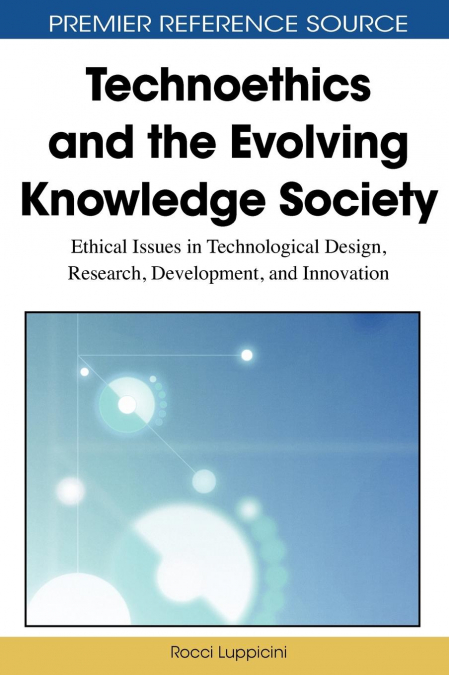
  • Technoethics and the Evolving Knowledge Society
    Rocci Luppicini
    Recently, there has been a major push to rediscover the ethical dimension of technology across the sciences, social sciences, and humanities. Technoethics and the Evolving Knowledge Society: Ethical Issues in Technological Design, Research, Development, and Innovation examines human processes and practices connected to technology embedded within social, political, and moral sph...
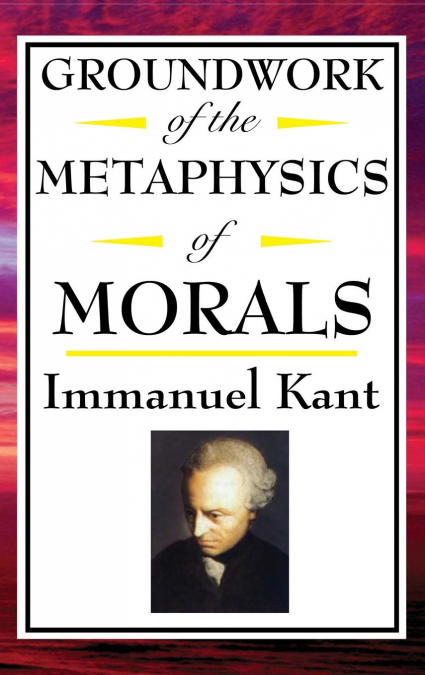
  • Kant
    Immanuel Kant
    Kant’s Groundwork of the Metaphysics of Morals is one of the most important works in modern moral philosophy. It belongs beside Plato, Aristotle, Machiavelli, and Hobbes. Here Kant sets out to articulate and defend the Categorical Imperative - the fundamental principle that underlies moral reasoning - and to lay the foundation for a comprehensive account of justice and human vi...
  • On the Duty of Civil Disobedience
    HENRY DAVID THOREAU
    Civil Disobedience argues that citizens should not permit their governments to overrule their consciences, and that they have a duty to avoid allowing their acquiescence to enable the government to make them the agents of injustice. Thoreau was motivated in part by his disgust with slavery and the Mexican-American War, but the sentiments he expresses here are just as pertinent ...
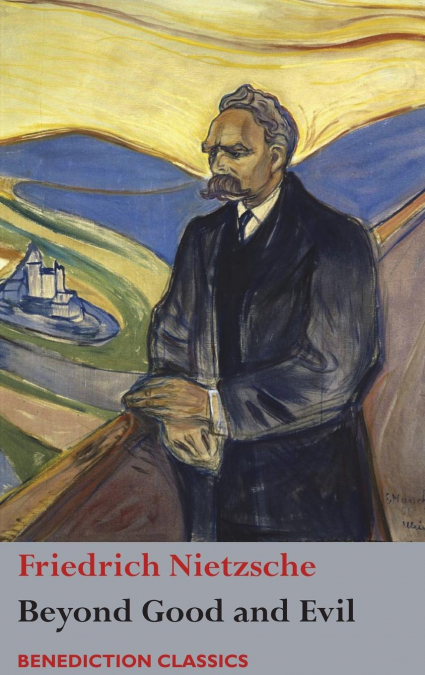
  • Beyond Good and Evil
    Friedrich Nietzsche
    Nietzsche, though primarily a philosopher, wrote widely on art, philology, history, religion, tragedy, culture, and science.  In 1886, at the height of his powers, he published Beyond Good and Evil.  Here he examines much of the best of human thought--dogmatic philosophy, Judeo-Christian morality, science and democracy – and finds it lacking.  Rejecting “slave-morality” he pres...
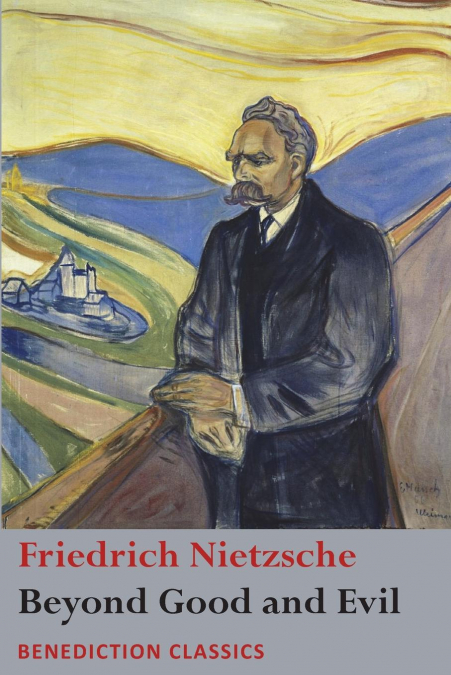
  • Beyond Good and Evil
    Friedrich Nietzsche
    Nietzsche, though primarily a philosopher, wrote widely on art, philology, history, religion, tragedy, culture, and science.  In 1886, at the height of his powers, he published Beyond Good and Evil.  Here he examines much of the best of human thought--dogmatic philosophy, Judeo-Christian morality, science and democracy – and finds it lacking.  Rejecting “slave-morality” he pres...
    Disponible

    9,99 €

Otros libros del autor

  • Embracing Our Finitude
    Stephan Kampowski
    Memento mori--remember death--this is how the medieval monks exhort us. Our life, given in birth and taken by death, is radically marked by finitude, which can be a source of great fear and anguish. Our finitude, however, does not in itself need to be something negative. It confronts us with the question of our life’s meaning and spurs us on to treasure our days. Our contingenc...
    Disponible

    23,26 €

  • Embracing Our Finitude
    Stephan Kampowski
    Memento mori--remember death--this is how the medieval monks exhort us. Our life, given in birth and taken by death, is radically marked by finitude, which can be a source of great fear and anguish. Our finitude, however, does not in itself need to be something negative. It confronts us with the question of our life’s meaning and spurs us on to treasure our days. Our contingenc...
  • A Greater Freedom
    Stephan Kampowski
    Description:How does biotechnology touch on human destiny? What are its promises and challenges? In search for a response, the present volume turns to the thought of Hans Jonas, one of the pioneers and founding fathers of bioethics. The continued relevance of his ideas is exemplified by the way Jürgen Habermas applies them to the current debate. The chief promise of biotechnolo...