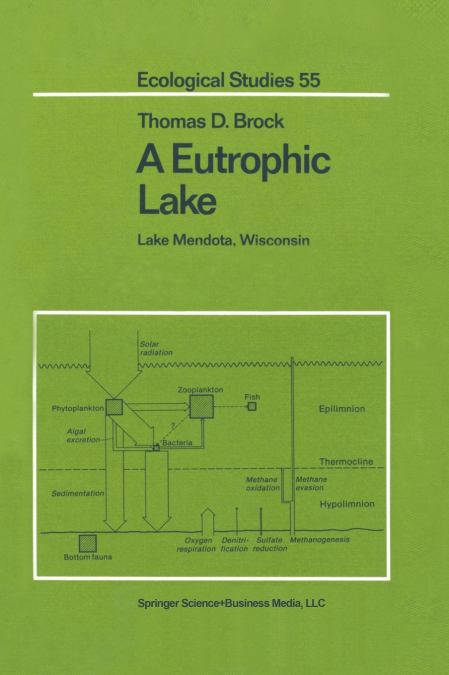

A Eutrophic Lake

A Eutrophic Lake

Thomas D. Brock

122,82 €
IVA incluido
Consulta disponibilidad
Editorial:
Springer Nature B.V.
Año de edición:
1985
Materia
Geología y la litosfera
ISBN:
9780387961842

Selecciona una librería:

  • Librería Samer Atenea
  • Librería Aciertas (Toledo)
  • Kálamo Books
  • Librería Perelló (Valencia)
  • Librería Elías (Asturias)
  • Donde los libros
  • Librería Kolima (Madrid)
  • Librería Proteo (Málaga)

1. Introduction.- The origin of the lake.- The naming of the Madison lakes.- Ownership of Lake Mendota.- The regional setting.- 2. Physical Limnology.- Morphometry and Hydrography.- General Features of the Lake.- Hypsometry of Lake Mendota.- Climate of the Lake Mendota area.- Water budget of the lake.- Thermal structure and heat budget.- Water movement.- Summary. The four seasons in Lake Mendota.- 3. Chemistry and nutrient loading.- Chemistry of the lake water.- Nutrient loading studies.- Sediment composition and chemistry.- Recent sediments in Lake Mendota.- Oxygen in Lake Mendota.- Nitrogen in Lake Mendota.- Phosphorus in Lake Mendota.- Iron and manganese.- Sulfate.- Chloride.- Silica.- Inorganic carbon in Lake Mendota.- Summary.- 4. Phytoplankton.- Methodology for studying phytoplankton populations in Lake Mendota.- Annual cycles of phytoplankton.- Mean depth of chlorophyll.- Surface/volume ratios of phytoplankton cells.- Diatom blooms in Lake Mendota.- Blue-green algae of Lake Mendota.- Buoyancy of the blue-green algae of Lake Mendota.- Where do the algae go?.- Summary.- 5. Phytoplankton photosynthesis and primary production.- Methods.- Calculating whole lake productivity from incubator data.- Photosynthesis/light (P/I) relationship.- Photosynthetic efficiency of Lake Mendota phytoplankton 125.- Primary production in Lake Mendota.- A model for Lake Mendota production.- 6. Zooplankton.- Methods for studying Lake Mendota Zooplankton.- Species composition.- Zooplankton abundance.- Biomass of Zooplankton.- Conclusions.- 7. Bacteria, carbon cycling, and biogeochemical processes.- Methods.- Bacterial biomass and production in the water column.- The impact of Zooplankton feeding on bacteria.- Importance of bacterial attachment to particles.- A model for bacterioplankton growth and disappearance.- Significance of algal excretory products for epilimnetic bacteria.- Bacterial processes in the anaerobic deep-water sediments.- Sulfate reduction in Lake Mendota.- Conclusion.- 8. Higher Trophic Levels.- Bottom fauna.- Fish.- Summary.- 9. Long-term Change in Lake Mendota.- Chemistry and nutrient loading.- Oxygen in Lake Mendota.- Secchi transparency.- Phytoplankton.- Zooplankton.- Bacteria.- Fish.- Conclusion.- 10. Energy flow in the Lake Mendota ecosystem.- Appendix 1. Physical and chemical data.- Appendix 2. Phytoplankton data.
Artículos relacionados

  • Exploration Science
    Dr Peter T Scott
    About Exploration ScienceHave you wondered what the science of geology is all about?Together we will explore of the surface and sub-surface of the Earth, the sub-branches of geology, including mineralogy, petrology (rocks), palaeontology (fossils), geochemistry, seismology (earthquakes), engineering geology, and many more.The scientific method used by all scientists as well as ...
    Disponible

    30,12 €

  • Fossils, Dinosaurs and Cave Men
    Patrick Nurre
    This textbook is a high school, semester study of the differences between the Biblcal and secular views of fossils, dinosaurs, and cave men.  Topics include the cause and mechanism for a global flood, the geologic time table, living fossils, the Tower of Babel, modern classification of dinosaurs, and more.  Students will also learn to interpret the geologic column from a Biblic...
    Disponible

    43,86 €

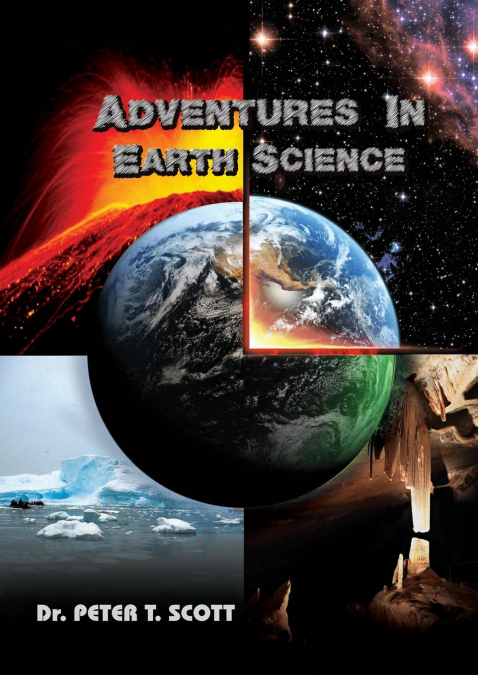
  • Adventures in Earth Science
    Dr Peter T Scott
    ADVENTURES in EARTH SCIENCE is not just an in-depth textbook but a series of adventures across seven continents and beyond in the sciences of astronomy, geology, meteorology and oceanography. It has been written with over forty years of experience in studying, researching and teaching earth science. Whilst it has been designed for senior high school and junior university or col...
    Disponible

    142,25 €

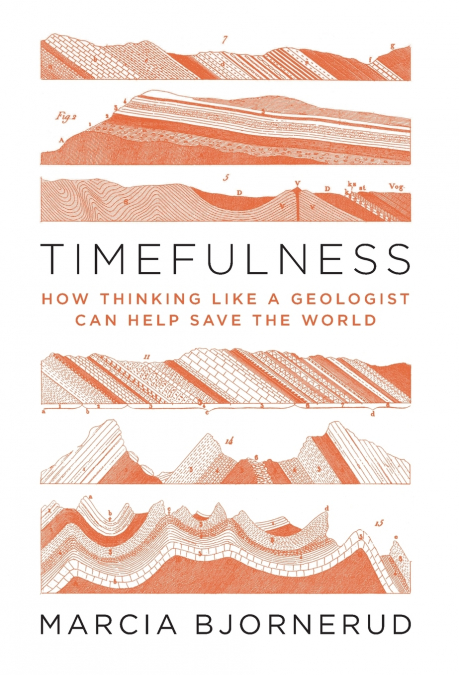
  • Timefulness
    Marcia Bjornerud
    Why an awareness of Earth’s temporal rhythms is critical to our planetary survivalFew of us have any conception of the enormous timescales in our planet’s long history, and this narrow perspective underlies many of the environmental problems we are creating for ourselves. The passage of nine days, which is how long a drop of water typically stays in Earth’s atmosphere, is somet...
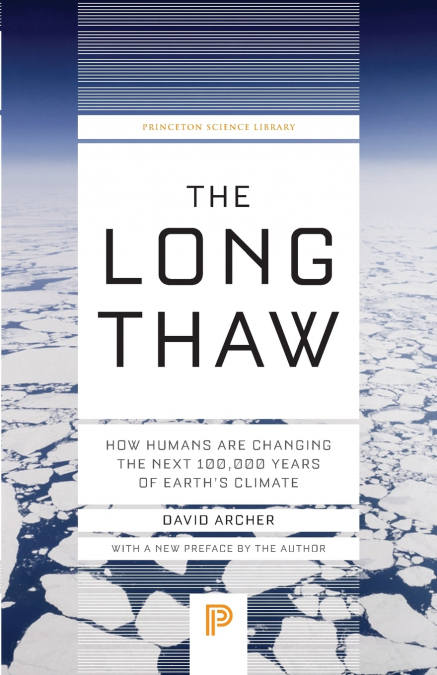
  • The Long Thaw
    David Archer
    Why a warmer climate may be humanity’s longest-lasting legacyThe human impact on Earth’s climate is often treated as a hundred-year issue lasting as far into the future as 2100, the year in which most climate projections cease. In The Long Thaw, David Archer, one of the world’s leading climatologists, reveals the hard truth that these changes in climate will be 'locked in,' ess...
    Disponible

    24,10 €

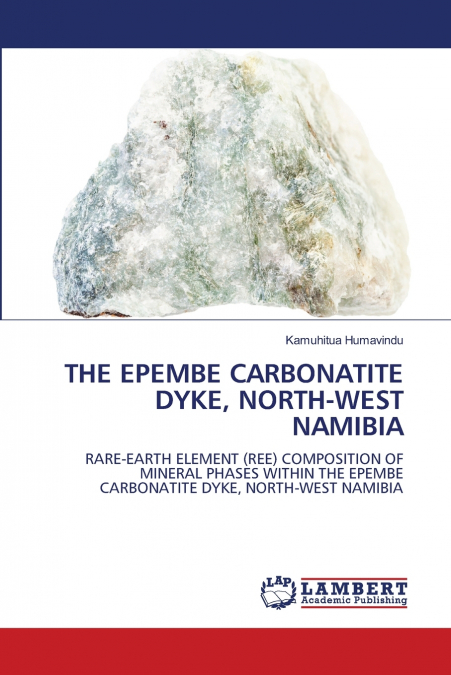
  • THE EPEMBE CARBONATITE DYKE, NORTH-WEST NAMIBIA
    Kamuhitua Humavindu
    This book gives a bright perspective on the nature of carbonatites along with different magmatic and hydrothermal processes that affect the distribution of these dykes. In the past there has been several debates on the enrichment mechanisms of rare-earth elements, making it a significant book especially now with the increase in technology. The research is filled with exciting f...
    Disponible

    75,64 €

Otros libros del autor

  • A Eutrophic Lake
    Thomas D. Brock
    Lake Mendota has often been called 'the most studied lake in the world. ' Beginning in the 'classic' period of limnology in the late 19th century and continuing through the present time, this lake has been the subject of a wide variety of studies. Although many of these studies have been published in accessible journals, a significant number have appe...
    Disponible

    68,17 €